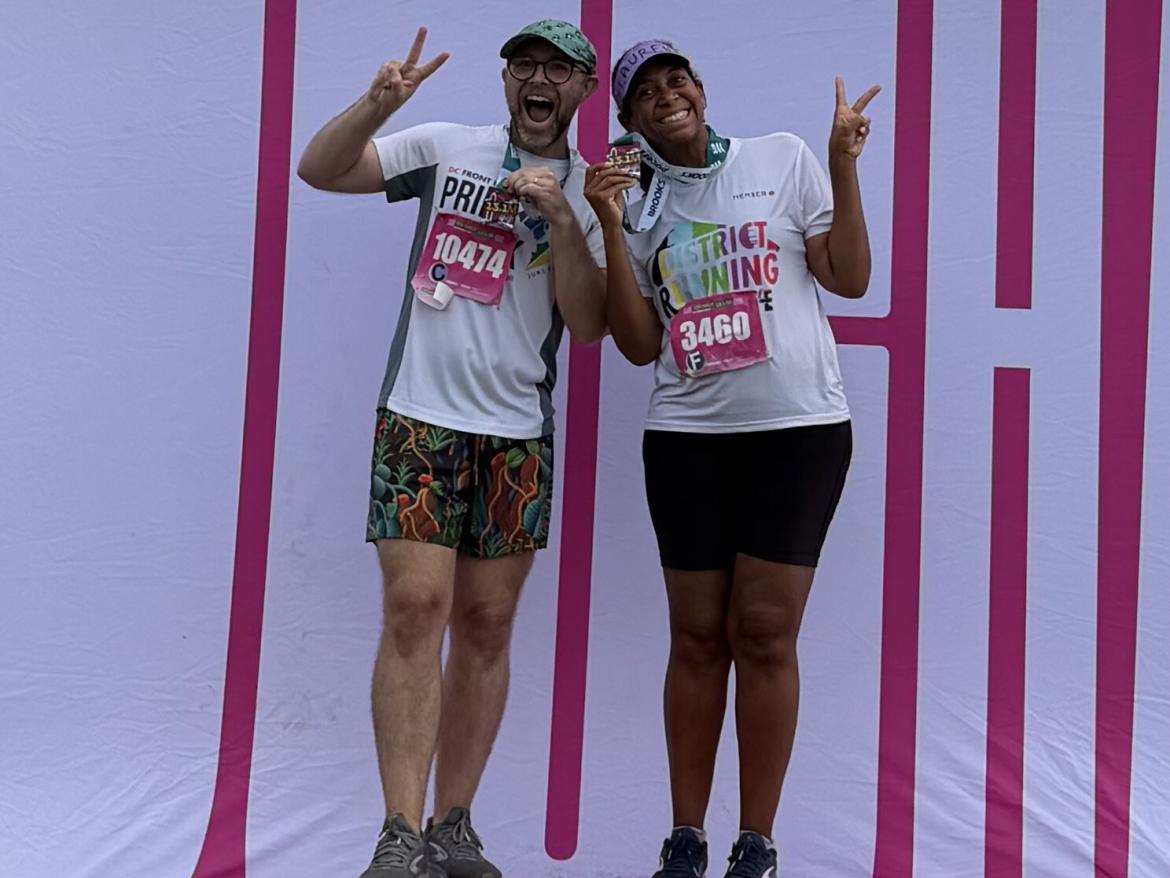
In every race, I wonder if I should keep running or take a break, but the 2026 DC Half-Marathon race was a little different. Not only is it difficult to run 13.1 miles on a good day, but it was pouring for a good chunk of the race. The rain, refreshing for the first 30 seconds, started waterlogging my shoes, making every step much harder.
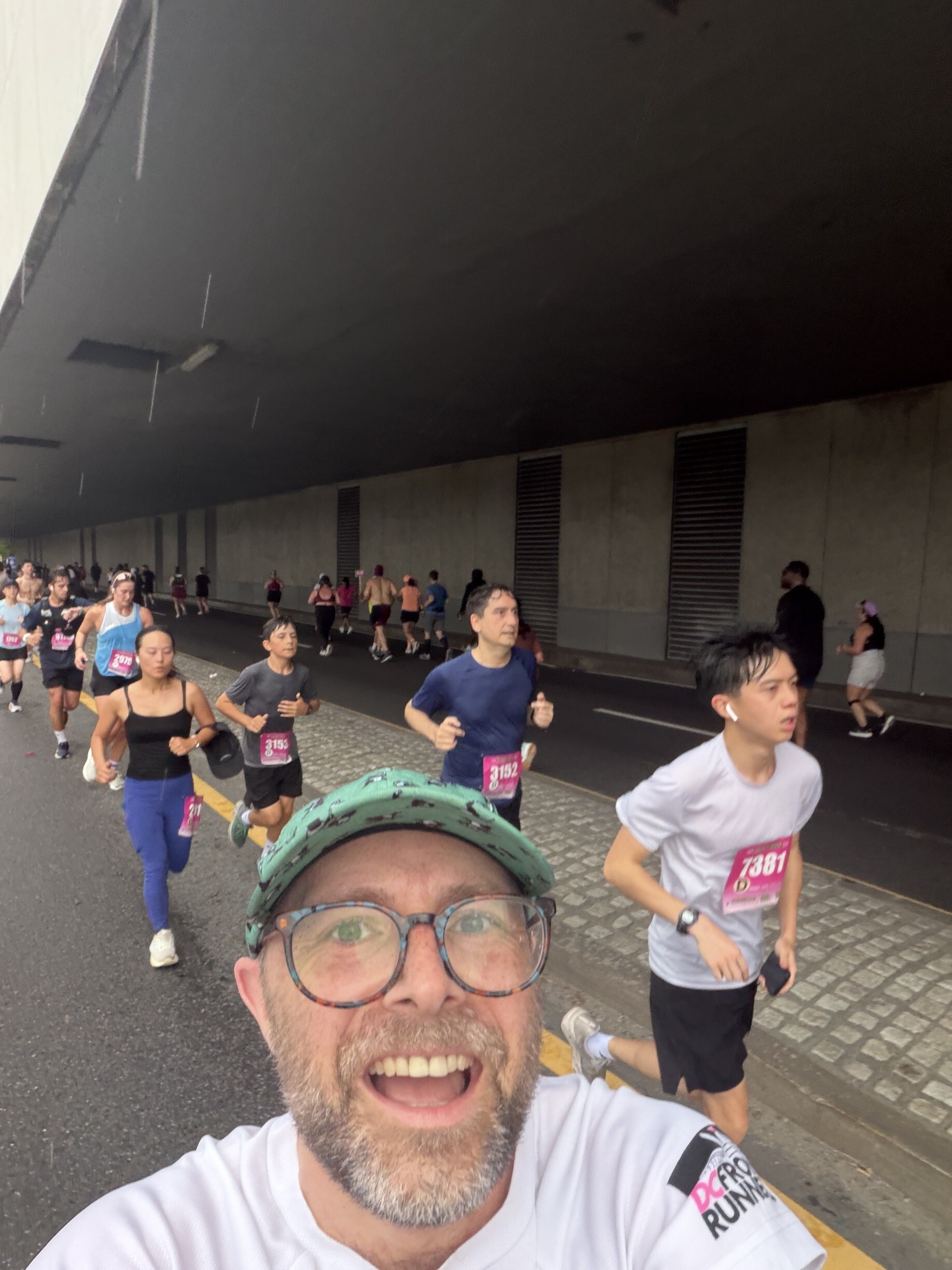
As we ran down Rock Creek Parkway along the Potomac River, I breathed a sigh of relief as we reached the Kennedy Center. The center’s back terrace overhangs the parkway, giving us some dry meters where I could wipe my glasses and recommit to the race. I started reflecting on the building itself and all that Americans have been through with the Kennedy Center since President Trump took office. I, along with many fellow Washingtons, committed to boycott the institution when President Trump installed himself as head of the board and then doubled down on that commitment when he put his name on the outside of the building, defacing the memorial to slain President John F. Kennedy.
While court battles continue to play out, let’s not forget how the Kennedy Center served the nation before President Trump took over. Of course, there was room for improvement, and some repairs were needed in the building, but the outlook was good for this beloved institution to keep fulfilling its mission to connect audiences and artists.
In a city filled with memorials to war, death, and destruction, the Kennedy Center stands as a living memorial, honoring President Kennedy’s legacy. Residents and visitors to the Nation’s Capital, including my family on numerous occasions, could see a free performance there every single day of the year. It’s also been used as a tool of cultural diplomacy over the years, including hosting the National Ballet of China for Lunar New Year and the National Ballet of Cuba under President Obama’s “Cuban Thaw.”
The parallels to USAID, another major part of President Kennedy’s legacy, are striking. USAID was also fulfilling its mission, albeit with room to improve, when it was dismantled by the current administration. These institutions arose from the same post-WWII optimism, and they speak to the highest aspirations of America.
We just learned that the State Department, which is supposed to have taken over foreign aid after USAID was eliminated, has moved $2.5 billion from global health and development assistance into a miscellaneous pot to use these funds for closing out USAID. How many people would still be alive if this life-saving aid had been delivered as Congress allocated?
Despite the current chaos, I believe that there is still hope for the U.S. government to support arts education, diplomacy, foreign aid, global health, and more programs to reflect our most fundamental values. I am reminded of the story David Hartsough told of the famous meeting of Quakers with President Kennedy:
Ed Snyder invited me to be a part of the delegation to meet President Kennedy in the White House in May 1962. We sat in a semi-circle at the Oval Office, with Pres. Kennedy on his rocking chair next to the fireplace. We encouraged him to take more leadership and move us away from the nuclear arms race.
We had heard that a nuclear submarine was going to be named the William Penn. We said we don’t believe in nuclear submarines, and William Penn would turn over in his grave. After 25 minutes, his secretary came in, told him his next appointment was there, and he said, “Tell them to wait. I’m learning something from these Quakers.”
-From an interview with David Hartsough, June 9, 2023
Perhaps it’s time for President Trump to learn from Quakers as well. One of the most important lessons I have learned in my 18 years at FCNL is that the work of peace and justice is a marathon, not a sprint.