Following the mid-term elections, the 119th Congress is set to return for a final session. Members of Congress should take bold steps to end the war in Iran, stop funding foreign wars, and begin to restore a budget process that centers the needs of working families.
The past two years have seen a further weakening of Congress’ influence, especially regarding federal spending and the use of force at home and abroad. The Trump administration has willfully ignored or distorted Congress’ spending directives with little consequence. This Congress is on track to have passed fewer bills into law than any other session in a half century.
Americans want more from their legislators. According to recent polling, a strong majority of Americans support stronger congressional oversight and checks on executive power. This is especially the case with consequential, costly decisions to launch foreign wars.
As the Congress takes up three pending bills, FCNL urges members of Congress to take bold steps to promote peace and dignity.
- Defense Authorization: It should not be business as usual as the United States continues to spend over a $1 billion a day on an unauthorized war in Iran. We urge Congress to use the National Defense Authorization Act (NDAA) to press for end to the war or at least an explicit prohibition on funds being used to sustain the war without authorization. At the same time, Congress should oppose dangerous provisions in the NDAA that would establish or expand new nuclear and autonomous weapons systems, or that would deepen U.S. military integration with Israel or other foreign countries engaged in human rights abuses. Congress should prevent the diversion of military resources into domestic enforcement, such as immigration and local civilian policing. FCNL has provided Congressional negotiators with recommendations for ensuring defense policies that promote peace and dignity.
- Appropriations: As Congress debates and finalizes its FY27 appropriations package, we urge that it rebalance federal spending away from a skyrocketing military budget to programs that foster peace, well-being, and safety at home and abroad. We join faith groups across the country in rejecting the proposed increase in military spending to $1.15 trillion, while urging increased, dedicated funding for peacebuilding and humanitarian assistance in the Middle East, Africa, and beyond. At home, we call for: increased funding for programs to prevent community violence; increased resources for detention oversight measures; report language on strengthening guidance, training, and reporting related to immigration enforcement at sensitive locations; and investments to fulfill the U.S. federal government’s public safety obligations to tribal nations. Finally, we urge Congress to enhance legislative safeguards to ensure that funds are spent as intended. FCNL has outlined specific recommendations for Congressional negotiators working on appropriations bills.
- Farm Bill: Congress should advance a bipartisan Farm Bill that strengthens environmental conservation, supports sustainable agriculture, and protects the natural resources upon which rural communities depend. Legislation should maintain robust funding for voluntary conservation programs, including the Environmental Quality Incentives Program (EQIP), Conservation Stewardship Program (CSP), and Regional Conservation Partnership Program (RCPP), which help farmers improve soil health, conserve water, and protect wildlife habitats. Congress should also preserve and expand the Rural Energy for America Program (REAP) to help farmers and rural small businesses invest in renewable energy and energy efficiency, reducing operating costs and strengthening energy security.
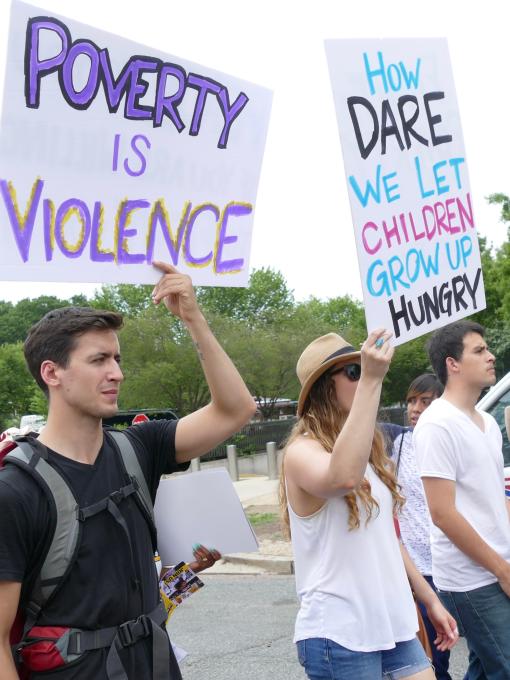
In whatever legislative vehicle possible, it is critical that Congress acts before the end of the year to delay a major shift in Supplemental Nutrition Assistance Program (SNAP) benefits that could cause millions of more Americans to lose access to food assistance. Since the One Big Beautiful Bill Act (P.L. 119-21) passed in July 2025, more than 5 million people have lost these benefits, including 2 million children. Under the current provisions, for the first time in the program’s history, states will soon have to pay a portion of SNAP benefits, based on the state’s error rate. This could cost states hundreds of millions of dollars they do not have and lead to more people losing benefits. A few select states, those with the highest error rates, get an additional two years before they must pay part of SNAP benefit costs.
Along with a coalition of faith-based partners and others, FCNL is urging Congress to act before the end of the year to delay the SNAP benefit cost shift onto all states and give states additional time to responsibly get their error rates down without dropping eligible people from the program. The timing is urgent because state legislatures will soon be deciding their budgets. Amid an affordability crisis, now is not the time to cut people’s food assistance.
The sun is setting on the 119th Congress. Some people refer to the last hour before the sun sets as “the golden hour.” This could be a golden hour of the 119th Congress if bipartisan leaders come together and use their powers to prioritize peace over partisanship, dignity over division. More than ever, our country needs that bold, moral leadership.