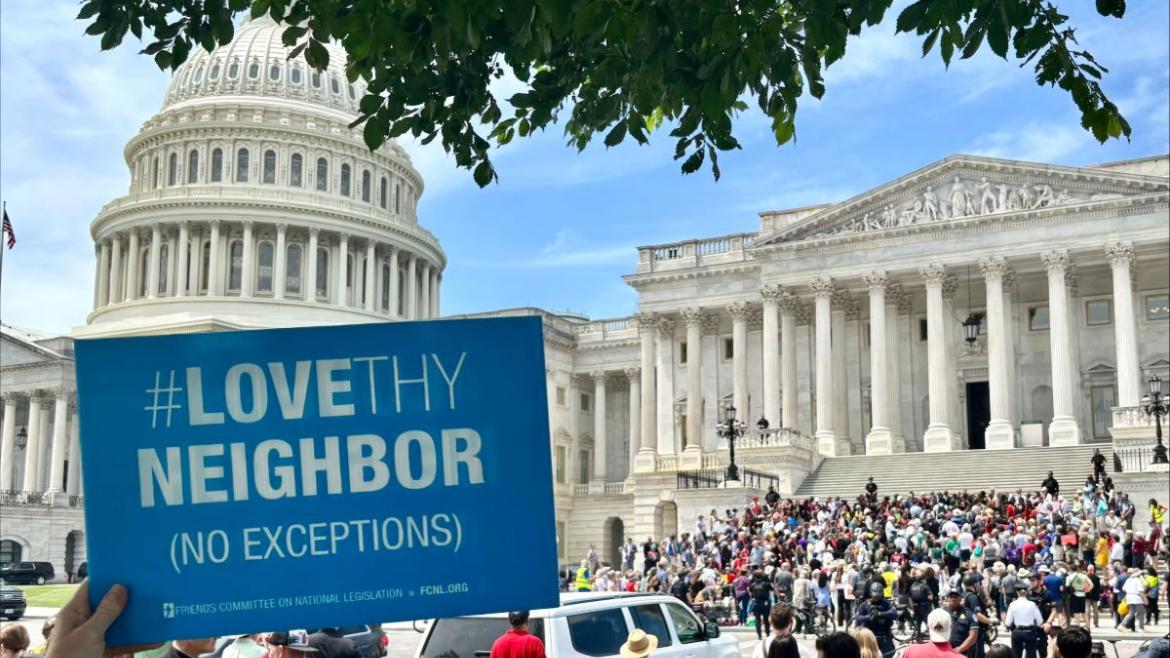
As I begin my new role at FCNL, I am reflecting upon the U.S. foreign policy we need for peace.
Our world is changing with the spreading of Artificial Intelligence (AI), growing climate crisis, widening economic inequality, declining trust in our institutions, and a shifting geopolitical order. Periods of profound change often bring about intensified conflicts as groups feel threatened and struggle to adapt. We are seeing that today. Violent conflicts worldwide have surged to record-high levels. More of these are conflicts between states. Nearly half of Americans worry that a new world war is likely over the next decade.
How the United States – as the wealthiest and more powerful country – engages the world in this period of change will have an outsized impact on prospects for peace and security.
Current U.S. foreign policy is focused on the use and threat of military force to try to assert control over and shape a changing world. In the past two years, the United States has launched or significantly escalated military operations in at least seven countries (plus the Caribbean and eastern Pacific Ocean) while publicly threatening wars against at least four more countries. At the same time, the United States has moved toward a dangerous, new global arms race with rivals involving AI, nuclear weapons, and outer space.
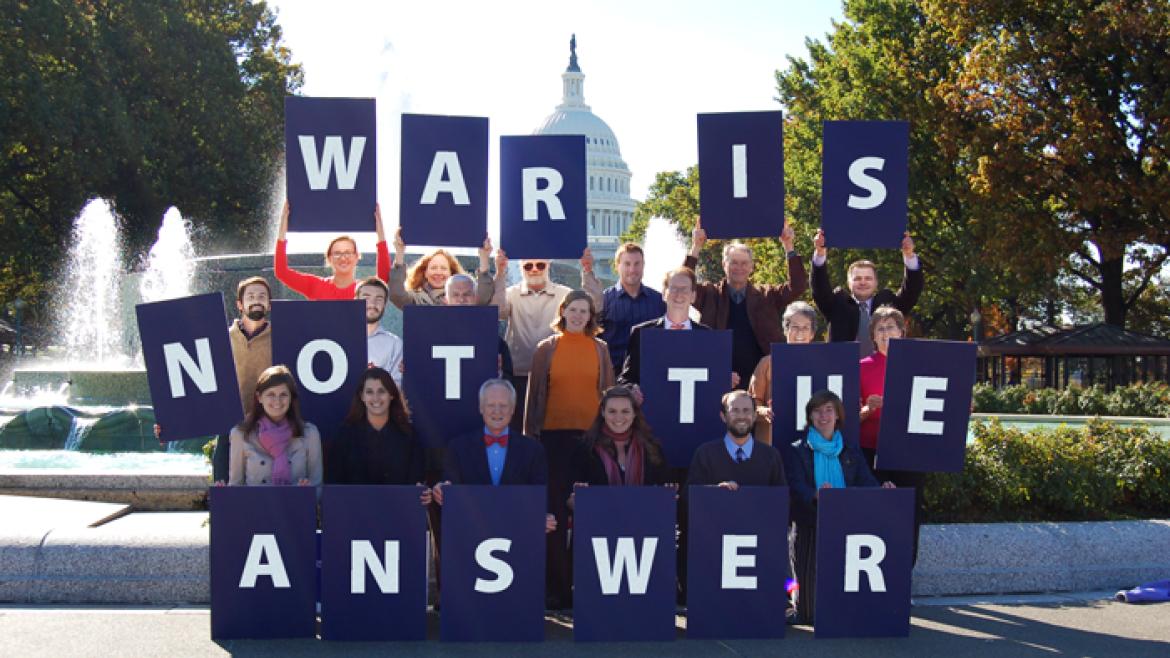
As FCNL has long said, war is not the answer. The pursuit of militarism and military aggression fans the flames of global conflict and instability, while hurting the working people at home most vulnerable to global challenges. We are seeing this with the war in Iran. For Americans, this war has cost over $45 billion in seven months alone, disrupted supply chains, and pushed fuel prices to record highs. More war will not make Americans safer, more secure, or more prosperous.
More war will not make Americans safer, more secure, or more prosperous.
On the left and right, we see growing opposition to the Iran war. This opposition will likely shape the upcoming midterm elections. Political leaders are also bringing more scrutiny to U.S. military aid to countries engaged in waging wars, especially those implicated in human rights abuses.
FCNL is urging Congress to take steps to stop current wars (through any legislative vehicle) and impose new restrictions on foreign military aid, while asking hard questions about the skyrocketing budget for the so-called Department of War and pursuit of dangerous, new weapons systems. This is a priority now and will continue to be as we engage with the incoming 120th Congress.
Restraining the use of force and runaway militarism is urgent and essential. Full stop. But if war is not the answer, what is? What is the foreign policy we need for peace?
The foreign policy we need leads with diplomacy and cooperation. The State Department should have dedicated programs for anticipating conflicts and pursuing dialogue to prevent and stop the escalation to violence. This includes expanded mechanisms for fostering communication and avoiding miscalculation with global rivals, especially China. Recognizing that global challenges require global solutions, we should renew support for the UN and other multilateral mechanisms.
This moment calls for both prophetic vision and pragmatic action, which FCNL uniquely combines.
We need a foreign policy budget that enables sustained peacebuilding and adaptation to global challenges, including climate change. A recent UN study found that over recent decades the world has spent $1 on peace for every $100 in military spending. That discrepancy is growing even worse as the United States and other donor countries cut foreign assistance. We must reverse this trend and build funding for peace, with an emphasis on empowering local leaders who are closest to the problems.
In this moment of change and conflict, we have the opportunity – and responsibility – to craft a different story of how the United States peacefully engages with a changing world and cooperatively manages global challenges. FCNL is engaging with a growing number of organizations on this imperative, including as a co-chair of the Future of Peace and Security Coalition with the Alliance for Peacebuilding. To be successful, this effort will need more voices, more ideas, and a bigger coalition.
This moment calls for both prophetic vision and pragmatic action, which FCNL uniquely combines. Together, we can lay the groundwork for the foreign policy we need for the world we seek.