It has been over a year since the “One Big Beautiful Bill Act” made the biggest cut to food assistance in history — nearly $200 billion. Now, the devastating consequences are beginning to be felt by our most vulnerable neighbors around the country.
The OBBBA radically changed how the Supplemental Nutrition Assistance Program, or SNAP, operates. It expanded requirements for reporting work, made fewer people eligible, and required states to take up a greater portion of the costs for administering the program.
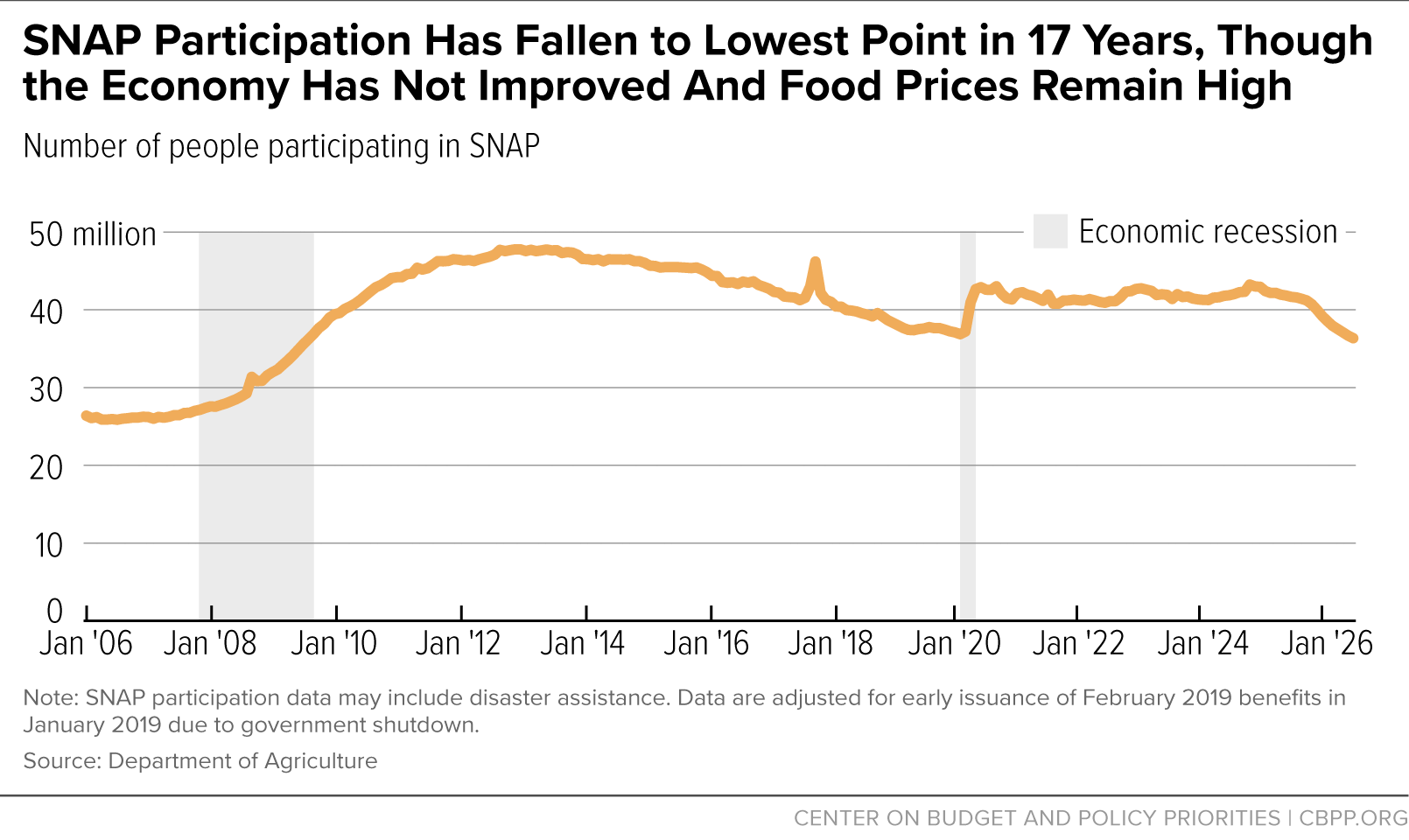
The most harmful change forces states to pay a portion of the cost of SNAP benefits; something states have never had to do before. As a result, SNAP participation has declined rapidly, with five million people, including two million children, losing food assistance.
Why the SNAP Cost-Shift is So Harmful
Beginning on October 1, 2027, states will have to pay between 5 to 15%, depending on the state’s error rate. Because the amount states will have to pay depends on their error rates, states have been racing to lower their rates before the cost share goes into effect.
Need hasn’t declined. What has changed is that people must now jump through more bureaucratic hoops to get the support they need.
Importantly, SNAP error rates often are from unintentional administrative failures, not recipients abusing the program.
However, delayed federal guidance, the unprecedented disruption to SNAP during the government shutdown in 2025, and additional federal cuts to funding for states to administer SNAP have all made it extremely difficult for states to responsibly reduce their error rates.
As a result, states have been taking frantic steps to reduce the amount of money they’re on the hook for.
Thus, states are making it harder for many low-income families to access SNAP, leading to the historic drops in SNAP participation we’re now seeing.
Since the beginning of the program in the 1930s, the federal government has always paid for the entirety of SNAP benefits. Now, states must find the money in their budget to continue the program’s operation. This could mean raising taxes or cutting other programs. Faced with a sizeable, unexpected bill and uncertain financial backing, some states may be forced to downsize or decide to opt out of SNAP altogether.
Congress Must Not Fail to Act
Allowing this to happen would be a grave and entirely preventable moral failure. Need hasn’t declined in communities over the past year. Groceries are not suddenly more affordable. What has changed is that people must now jump through more bureaucratic hoops to continue getting the support they need.
This massive drop in SNAP participation is also another strain on charitable organizations and food banks, which will only worsen if Congress fails to take action.
The OBBBA gave select states with the highest error rates an additional two years before they have to pay a portion of SNAP benefit costs. Given the crisis unfolding across the country, it is crucial that all states should receive this additional time.
State legislatures will soon be making decisions about their upcoming budgets.