In October 2026, FCNL partnered with the American Friends Service Committee (AFSC) and the Salama Hub to support a delegation of East African peace activists visiting Washington, D.C. to advocate to Congress and the State Department. Members of the delegation included religious leaders, humanitarian workers, grassroots organizers, and human rights defenders from Kenya, Ethiopia, Sudan, South Sudan, Somalia, and Uganda.
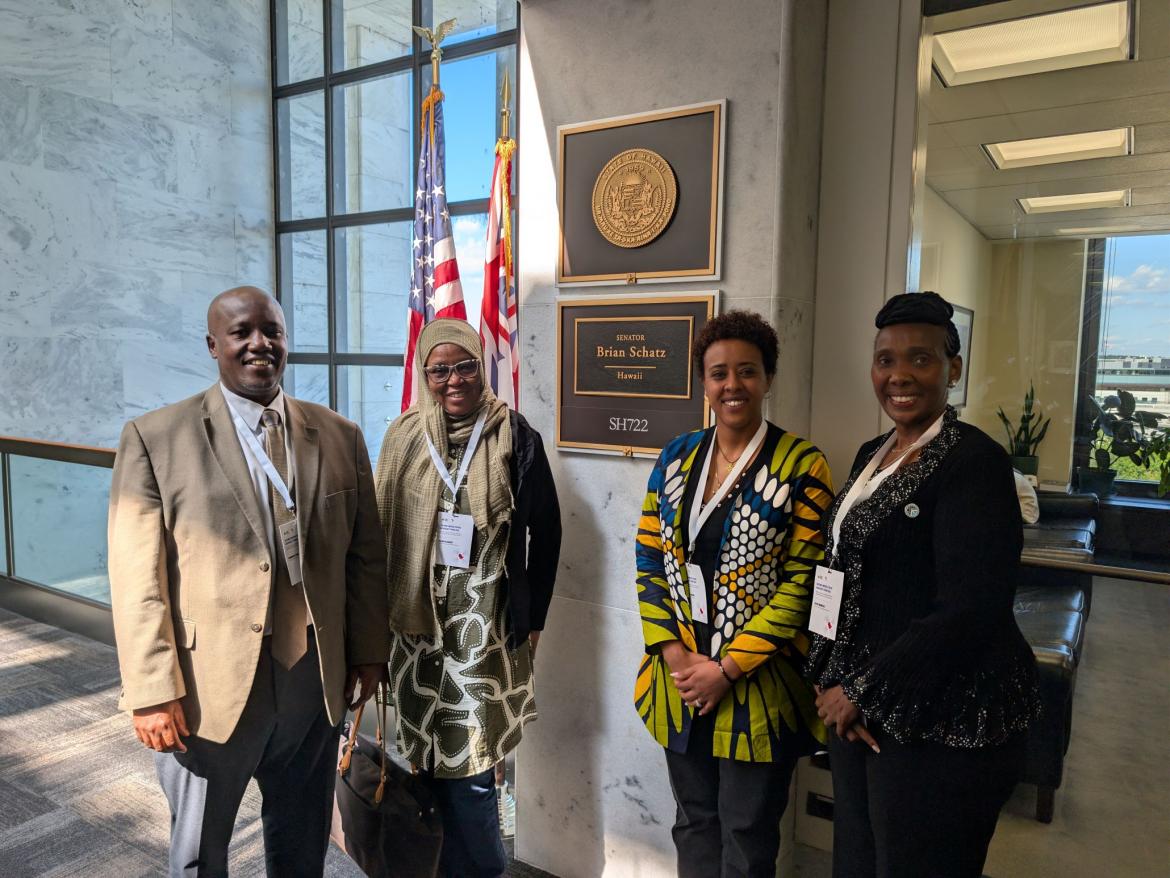
Peacebuilding efforts are most durable when they are guided and led by local peacebuilders based in affected communities. In the East and Horn of Africa, violent conflict has been a persistent challenge – but the work of local peacebuilders has been equally persistent.
Sudan has experienced three years of brutal warfare that has included crimes against humanity and genocide. Salwa, a Sudanese delegation member, has spent more than a decade advancing the cause of women, peace, and security, with a focus on protecting civilians, preventing violence against women, providing psychosocial support, and ensuring women’s meaningful participation in peace and decision-making. In her meetings on the Hill, Salwa advocated for the U.S. to prioritize funding and protection for Sudanese local responders, increase funding to support survivors of sexual and gender-based violence, and ensure unrestricted access to humanitarian aid.
In Ethiopia, a country facing renewed violence after the breakdown of the 2022 cessation of hostilities agreement that stopped a brutal two-year civil war, Tewaney, another delegation member, works to bridge ancient religious traditions and modern environmental action. He focuses heavily on the preservation of Ethiopia’s sacred “church forests,” biodiverse ecosystems protected by centuries-old monastic rules. In his meetings, Tewaney called on policymakers to address climate-related resource disputes and to support an immediate cessation of hostilities in Ethiopia’s Tigray, Amhara, and Oromia regions.
[Tewaney] focuses heavily on the preservation of Ethiopia’s sacred “church forests,” biodiverse ecosystems protected by centuries-old monastic rules.
The Salama Hub, a research and advocacy hub led by AFSC with support from the All Africa Conference of Churches (AACC) and Brot für die Welt, connects and equips these peacebuilders with the tools needed to advocate for peace and non-violent responses to conflict.
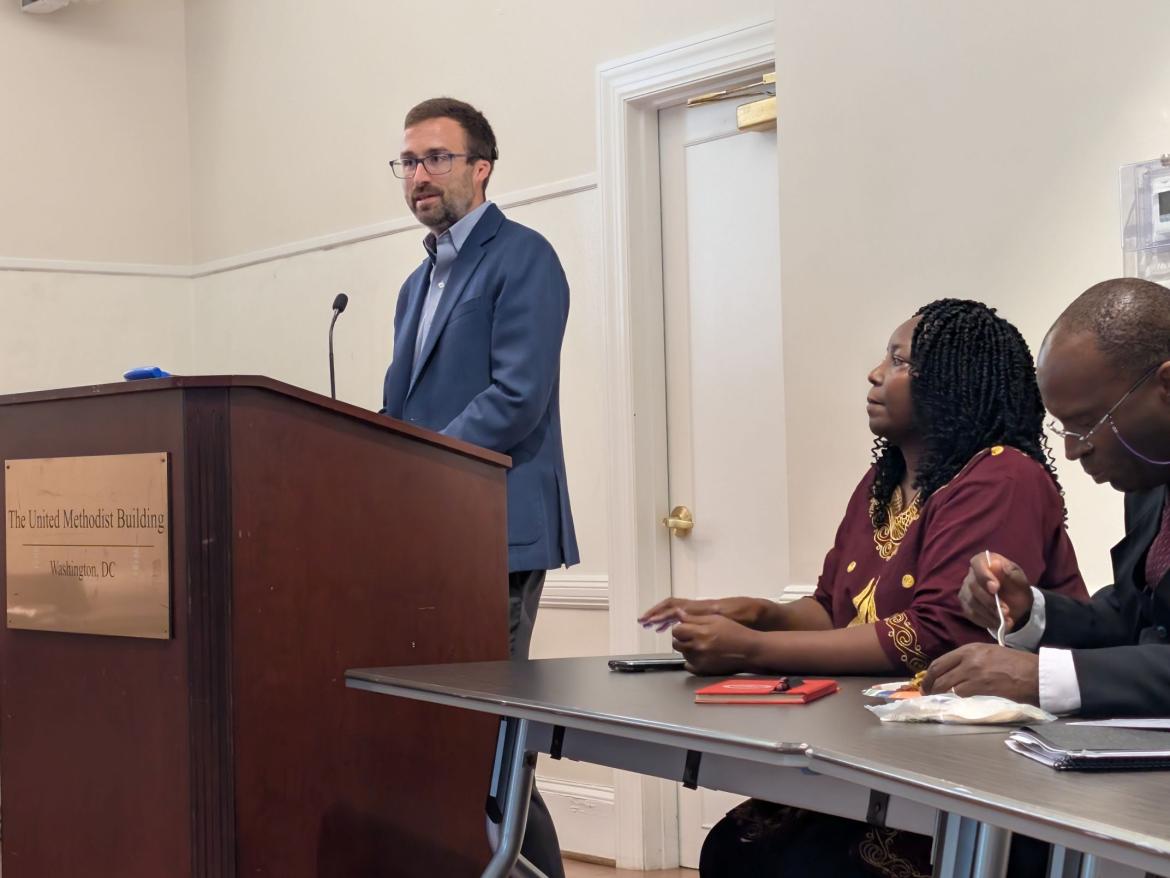
FCNL’s Director of Foreign Policy, Peter Quaranto, offered welcome remarks at a luncheon with the delegation and members of the DC-based faith community, drawing from his professional experience to affirm the importance of uplifting local voices in policymaking on peace and security in Africa. FCNL’s peacebuilding team helped schedule bipartisan meetings for the delegation on the Hill and prepared them for their meetings with Congressional staff.
The delegation members urged policymakers to increase U.S. humanitarian assistance, to support refugees and civilian protection efforts, and to issue statements in support of protecting civic space and credible elections. Further, they urged Congress to center women, youth, and local peacebuilders in all U.S.-supported peace and reconciliation efforts across the region.