Although Iran and the United States have reached a fragile ceasefire, the conflict has already inflicted devastating damage on civilians and critical infrastructure.
Almost 4,000 Iranians have been killed by U.S.-Israeli strikes, including at least 175 people, mostly young students, at the Shajareh Tayyebeh girls’ elementary school in Minab. In Lebanon, Israeli attacks have displaced millions and killed almost 3,000 civilians.
In both countries, civilian infrastructure including healthcare facilities, apartment buildings, and water desalination plants have been damaged or destroyed.
Yet the cascading harms caused by this war don’t stop there. As communities are uprooted and essential systems collapse, the ongoing conflict is worsening climate vulnerability, forced migration, and making the urgent challenge of building lasting peace harder.
As we continue to urge Congress to exert its war powers to urgently stop this immoral war, lawmakers must also address these deeper harms by investing in vital foreign assistance programs in the National Security, Department of State, and Related Programs (NSRP) funding bill.
Migration
The war has worsened the humanitarian crisis in a region already facing significant needs. Internally displaced persons require urgent assistance, and people fleeing war and persecution need safe refuge.
The International Humanitarian Assistance (IHA) account in the NSRP bill supports emergency aid to internally displaced persons and facilitates refugee resettlement to third countries or the United States.
Investments in humanitarian assistance are vital to reducing suffering and upholding global stability.
As this war and other conflicts persist, sustained and reliable investment in the IHA account is vital to reducing human suffering and upholding global stability in an increasingly strained humanitarian landscape.
The IHA account supports frontline humanitarian organizations that are assisting people fleeing the conflicts in Iran and Lebanon, monitoring border crossings, and providing emergency relief to displaced populations throughout the region.
In previous years, several unique funding accounts, such as International Disaster Assistance and Migration and Refugee Assistance, funded emergency aid in contexts from natural disasters to armed conflict.
For example, during the Syrian refugee crisis, these accounts provided lifesaving assistance to displaced Syrians across the Middle East while also supporting refugee processing, protection, and resettlement services.
These accounts have now been combined into the IHA, and Congress must continue to protect these funds for vital humanitarian relief and refugee assistance in crisis settings around the world.
Climate
Beyond the devastating loss of life and human suffering brought on by the conflict in Iran, its impact has extended into many industries, especially energy.
While a long-term peace agreement between Iran and the United States could significantly lower energy costs, this war underscores the value of strong renewable infrastructure, which shields countries from fossil fuel market volatility.
As the United States launched its assault, Iran closed the Strait of Hormuz and struck energy facilities across the Gulf.
This war underscores the value of strong renewable infrastructure.
Prior to the war, roughly 20 percent of the world’s oil and liquid natural gas (LNG) shipments transited through the strait. Now, oil and natural gas prices have surged in the United States and around the world. U.S. gas prices have climbed more than 70 cents, with the national average now sitting at $4.45 as of May 27.
The climate accounts in the NSRP funding bill directly support programs that protect communities from these kinds of devastating energy and infrastructure shocks by funding renewable energy development, adaptation measures aimed at reducing vulnerabilities, and conservation programs vital to natural resources and ecosystems.
Peacebuilding
For decades, the United States has aimed to support civil society in Iran through democracy assistance grants aimed at promoting accountability, human rights, and the rule of law.
Starting this war has undermined those decades of investment. The U.S. attack on Iran harms years of financial and human investment in building trust, supporting civil society, and fostering relationships between the Iranian and American people. It will delay peaceful progress for a whole generation.
The real question is not whether we can afford to invest in peace, but whether we can afford not to.
Accounts in the NSRP funding bill that invest in civil society, good governance, and conflict prevention are one of the most direct levers the United States has to support long-term stability. Cutting or neglecting them undermines efforts to prevent future crises, leading to much higher costs for American taxpayers in the long run.
The conflict in Iran and the Middle East at large highlights how the price of inaction compounds. The real question is not whether we can afford to invest in peace, but whether we can afford not to.
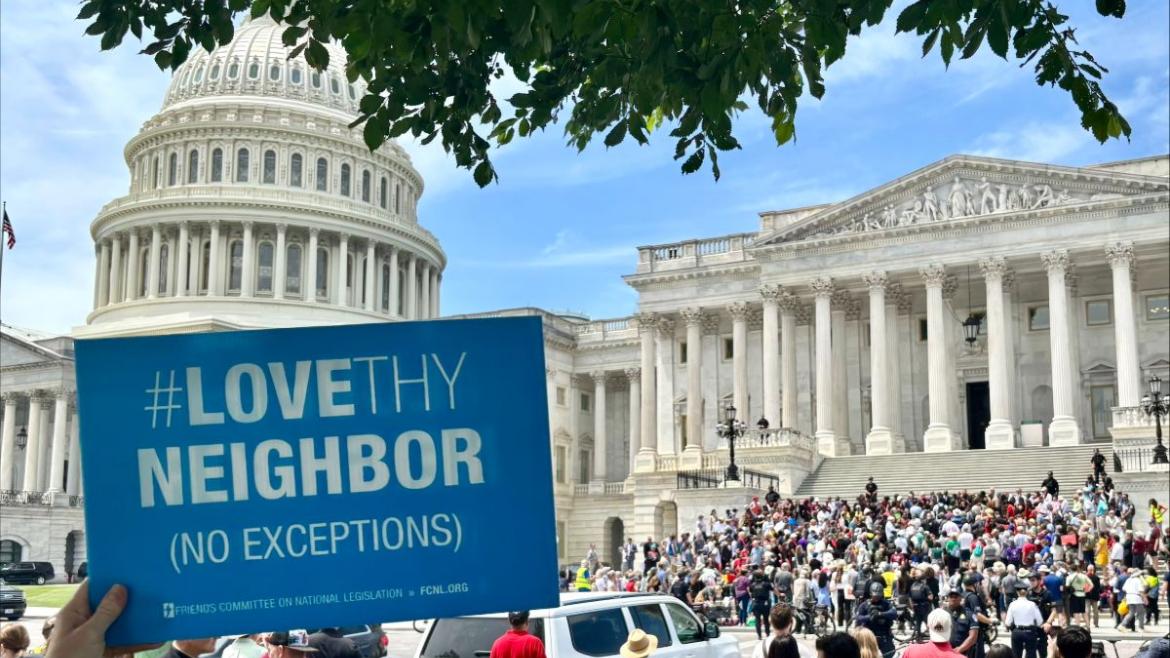
Join us in urging your Member of Congress to oppose this senseless war by voting YES on the Iran War Powers Resolution, opposing billions more dollars for this war, and supporting increased funding for foreign assistance accounts in the FY27 NSRP bill.