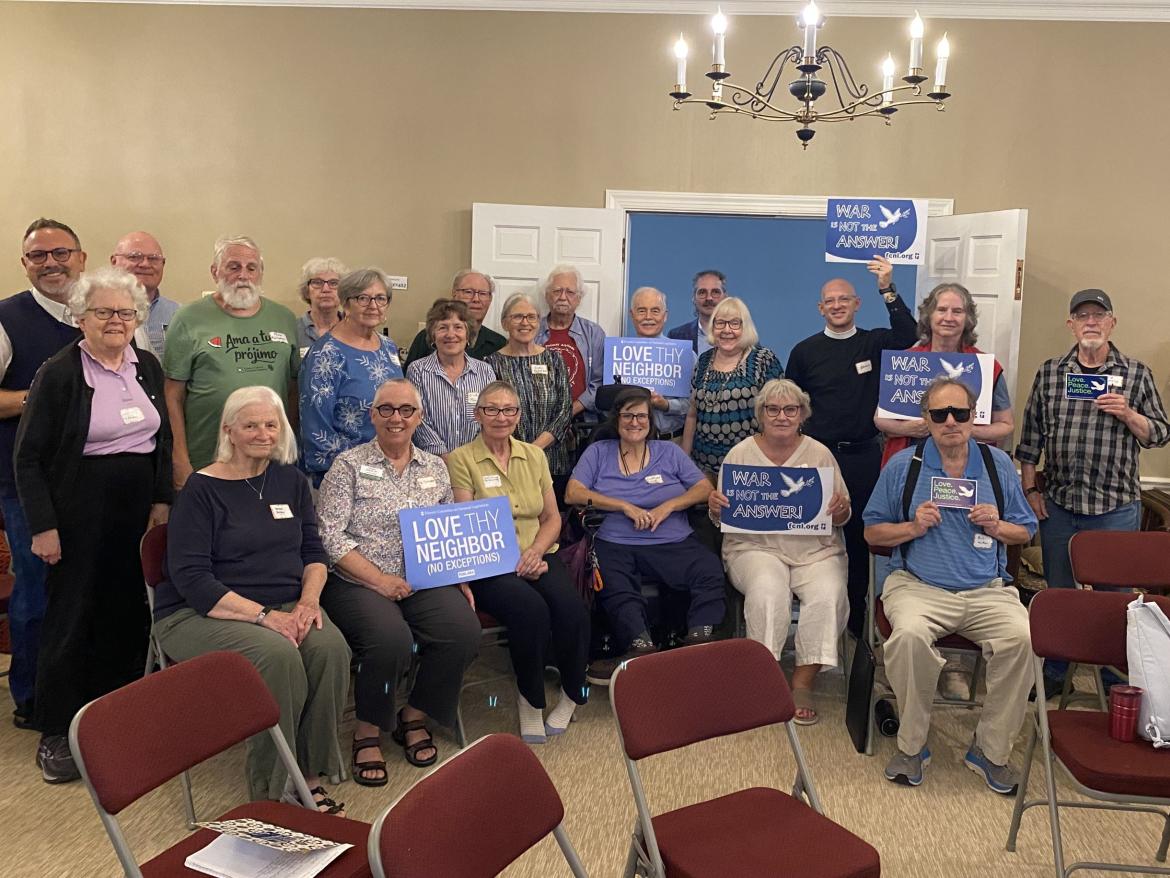
Advocacy Teams have been busy this year organizing with faith leaders in their communities. These trusted moral voices can open doors for the teams and show the desire of the community to act. In August, they focused their lobbying on peace and justice issues that move their community and are active in Congress.
Why are faith leaders effective voices for peace?
Members of Congress and their staff see faith leaders as trusted moral leaders who bring important perspectives to key issues. Their moral and prophetic voices make them particularly powerful messengers for peace. Faith communities also have a long history of leading movements for social change, giving their witness historical weight.
How are Advocacy Teams organizing faith leaders?
Advocacy Teams are building relationships with faith leaders through community networking, conversations at houses of worship, and interfaith and community organizations. Our primary approach has been inviting faith leaders to join sign-on letters to members of Congress. These invitations build relationships and open the door to deeper collaboration, including lobbying.
What do you hope develops from this organizing?
I hope Advocacy Teams develop deeper relationships in their communities, particularly with faith leaders and other community leaders, and build a larger, more diverse, and stronger constituency for peace. It has been especially rewarding to watch Advocacy Team members develop new organizing skills and realize they can have greater impact by bringing more people into the work.