Permitting Reform Advances
Following a procedural vote in the Senate, it seems that the Bipartisan American Affordability and Jobs Act “BAAJA” (S. 5653) is set to advance out of Congress by Thanksgiving. This bipartisan package aims to fast track new infrastructure and energy projects. The reality is less simple. Several environmental activists and Indigenous tribes criticize BAAJA for weakening bedrock environmental protections and infringing on tribal sovereignty. There are also fears that project certainty requirements and National Environmental Policy Act (P.L. 91-190) changes in the bill would give the Trump administration the power to fast track harmful projects, such as detention centers.
Permitting reform is necessary to facilitate a transition from fossil fuels towards renewable energy. In that area, this bill is a step in the right direction and would fast track approvals for new energy projects. While an amendment from Senators Whitehouse, Capito, Heinrich, and Lee mitigates some of the deregulation proposals, concerns remain around native sovereignty, public consultation, and the weakening of popular environmental protections.
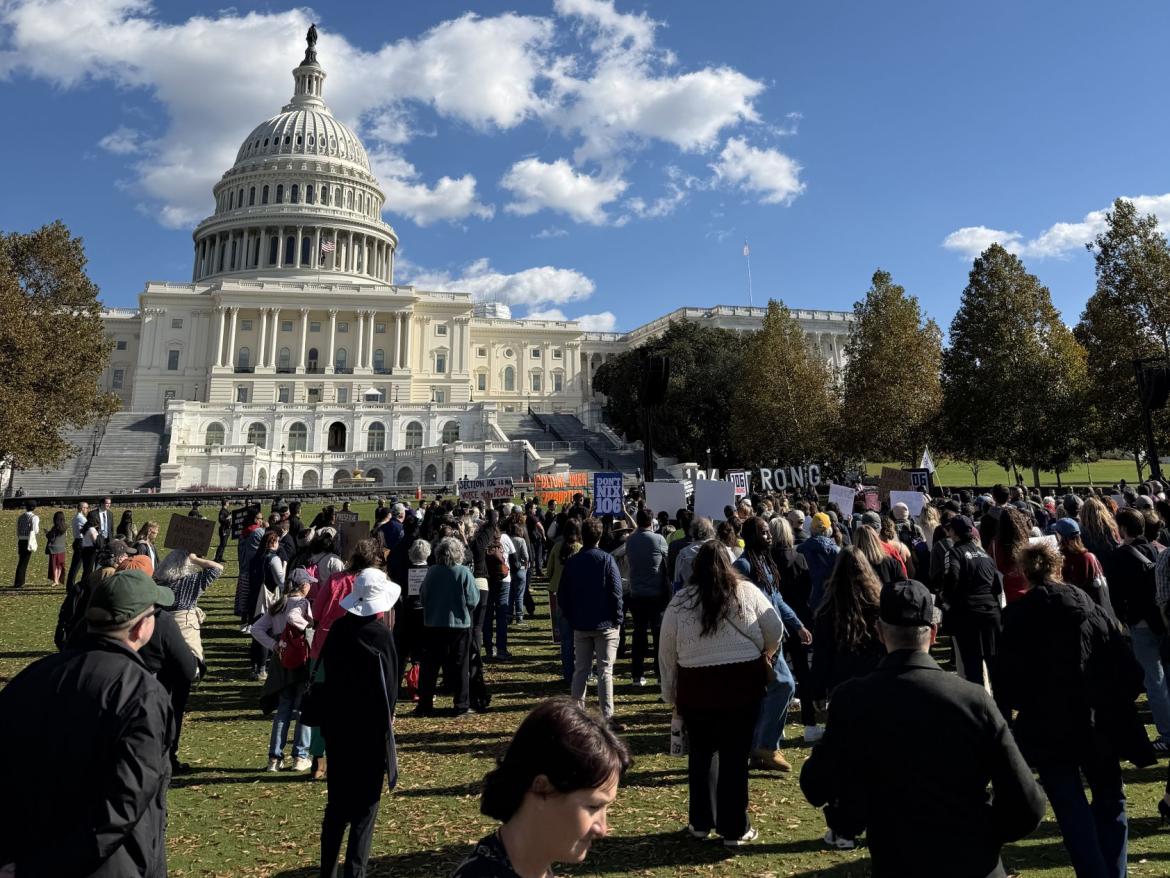
Last week I was able to attend a protest against BAAJA hosted by environmental groups and tribal leaders. This protest highlighted the tension at the heart of the permitting reform: the desire to build a renewable future against the need to respect tribal sovereignty and preserve our environment.
USDA Attacks Green Rural Energy
The U.S Department of Agriculture has implemented a new rule to the Rural Energy for America Program (REAP), an initiative to help farmers and business owners to build renewable energy on their property. While this rule is being challenged in court, Congress has a role to play in defending its congressional power from executive overreach.
The new rule places obstacles for farmers and businesses to access funding for renewable projects. It requires projects to be operational for 12 months before applying for a loan and requiring people to invest their own cash into projects without guaranteed financial support. This bipartisan program has helped people cut down on the cost of their utilities, opened new revenue streams, and distributed billions of dollars towards rural communities.
It was Congress who originally created REAP and can include robust support for the program in the 2026 Farm Bill. With the rising cost of living, REAP is an opportunity to promote stewardship of our environment and support this nation’s producers in these challenging economic times.
Iran War Causes Energy Crisis, Forcing Countries Around the World to Adapt
The demand for energy is continuing to rise, with economies forced to adapt due to the loss of 20% of global liquid natural gas supply because of the war in Iran. This has caused price volatility across the globe and forced economies to use alternative energy sources. Some have turned to coal, but more countries are using renewable energy, which is set to overtake coal-fired output in 2026.
Climate advocate and author Bill McKibben wrote, “That’s because all of a sudden we have an alternative to oil, and if you look around us, oil is the cause, the weapon, and the casualty of our current round of conflicts.” Communities around the world no longer have to depend on an extractive industry that has devastated the environment, perpetuated imperialism, and sparked violent conflicts. This year has shown that renewables can meet our energy demands and play a role in creating a more peaceful world.
What We’re Reading:
- US Flexes Climate Action Muscle at COP31 Despite Trump No-show | Deutsche Welle
- Trump’s Losing Battle with Green Energy | The Financial Times
- Are the Peace Movement and the Climate Movement the Same Thing? | The Crucial Years
- We Electrified Our 1931 Home. State Leaders Should Make It Easier for Every American to Do the Same | Jay Inslee