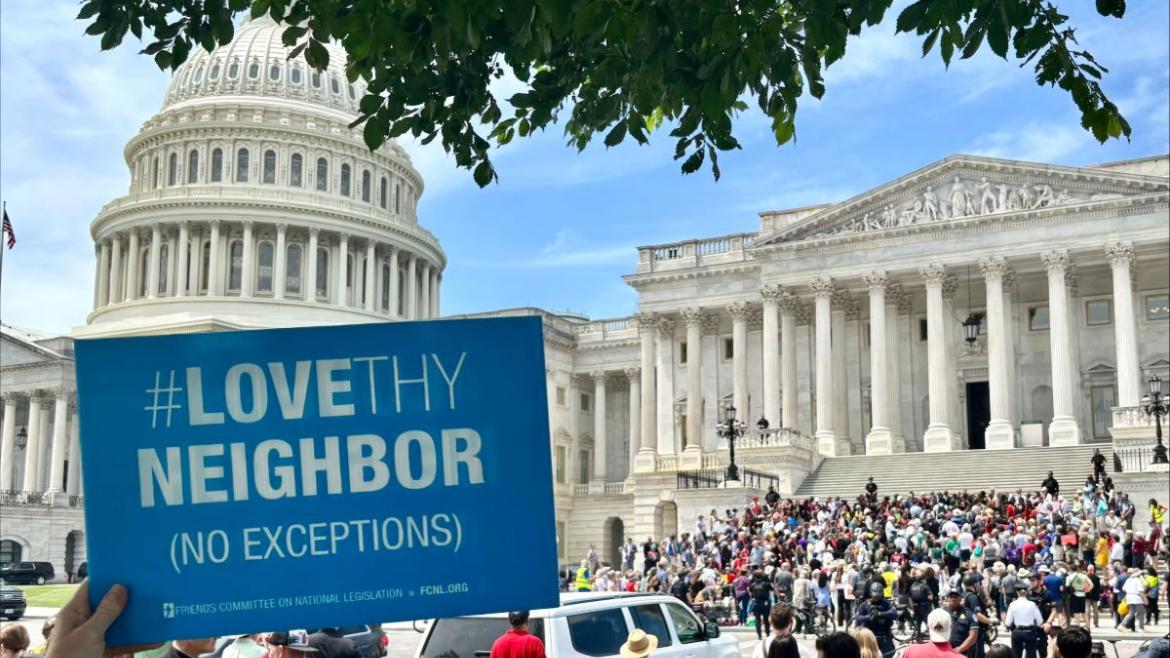
On November 3, Americans will once again make their voices heard at the ballot box. While the task of the midterms may not have changed, the U.S. political reality is anything but usual.
From the dismantling of civil rights protections to the forced disappearance of residents, the Trump administration has frequently attacked Americans’ civil rights. Some of the most alarming of these attacks have been on the right to vote, including both anti-voter legislation and threats of deployments of armed federal agents to polling places.
The SAVE Act (H.R. 7296) — one of the administration’s worst attacks on the right to vote — would disenfranchise millions of voters in the name of solving a pseudo-problem: noncitizens voting in U.S. elections.
The SAVE Act is a harmful solution in search of a problem.
By mandating the use of a series of documents to which many Americans do not have easy access, experts estimate that the SAVE Act would make over 21 million citizens ineligible to vote. Moreover, it would put immense pressure on state and local election officials, who would need to verify a voter’s citizenship correctly under penalty of criminal prosecution.
Non-citizen voting, which the majority used to justify its support for this destructive bill, continues to be almost non-existent. The SAVE Act is a harmful solution in search of a problem.
Fortunately for the United States’ democracy, after the House of Representatives passed the bill on February 11, 2026, the SAVE Act has remained stalled in the Senate, which is why it won’t impact the coming midterms.
The Senate minority is able to inhibit the legislation because of the filibuster: the requirement that at least 60 Senators must vote to end debate before a piece of legislation can come to the floor. President Trump attempted to reform the tactic with a “talking filibuster,” which would have forced Democrats to hold the floor through constant speech. Fortunately, Senate Majority Leader John Thune sidestepped the President’s request, fearing a talking filibuster could backfire in a flipped Congress.
The Possibility of Federal Deployments to the Polls
Unfortunately, it is increasingly likely that the Trump administration will send armed federal agents to intimidate voters at the polls on November 3. The seizure of voter rolls and ICE knocking on doors of non-citizens who they accuse of voting illegally are troubling escalations and outside of the norm.
In the months since the President demanded that the majority “nationalize” voting, federal agents have seized sensitive state voter file information, sued the states who refused to comply, and attempted to keep voters without access to citizenship documents from the polls. Considering the failure of these efforts, the President has a choice between abandoning this fight or making good on his demand.
Several civil and criminal statutes address this exact situation. Along with related state and local laws, this comprehensive collection of voter protections safeguards the U.S. electorate from intimidation at the polls.
Over the last few years, however, President Trump has consistently broken the laws of our nation. The administration may again try to circumvent these laws or take advantage of a loose reading of the exception in 18 USC 592 to deploy federal law enforcement.
We cannot wait until the morning of November 3 to act.
One notable possibility is that the President could deploy agents of a federal agency under the umbrella of one of their core missions. In fact, this is why the Secretary of Homeland Security Markwayne Mullin left the door open to sending ICE to the polls.
The presence of ICE officers at the polls is different from “repelling armed enemies of the United States,” which is the only exception to the protections laid out in 18 U.S.C. § 592. This was drafted to prevent Confederate soldiers from acting as a belligerent threat at or near the polls following the Civil War. Today, an invading military would have to be present for this exception to be viable. These protections also apply to presidential control over the National Guard.
We’ve seen this administration disregard norms and laws before. We cannot wait until the morning of November 3 to act. Ask your members of Congress to speak strongly in support of free, fair locally controlled elections free of federal intimidation.