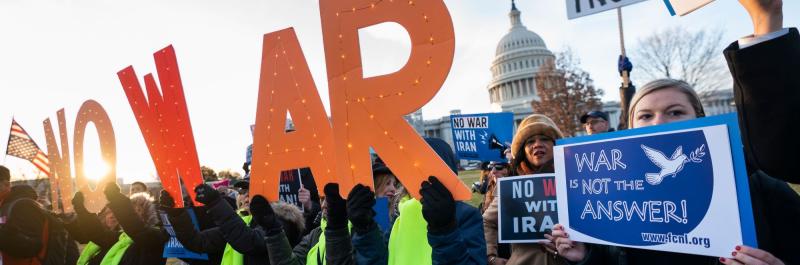
“Never, ever be afraid to make some noise and get in good trouble, necessary trouble.” Late Congressman John Lewis, a longtime ally of FCNL, used versions of this quote often, sometimes pairing it with the phrase, “…and help redeem the soul of America.”
This quote is the essence of FCNL’s Advocacy Corps program, which celebrates a decade of organizing this year.
The Advocacy Corps emerged at the urging of FCNL’s governors to engage young adults more fully. “Young people have long been catalysts for change—in both the U.S. government and Quakerism,” said former program manager Katie Breslin. “Centering youth was a very Quaker decision.”
Through a series of consultations, guided by former general secretary Diane Randall, FCNL discerned that communities across the country wanted tools and training to “make some noise” locally and advocate in the manner of FCNL.
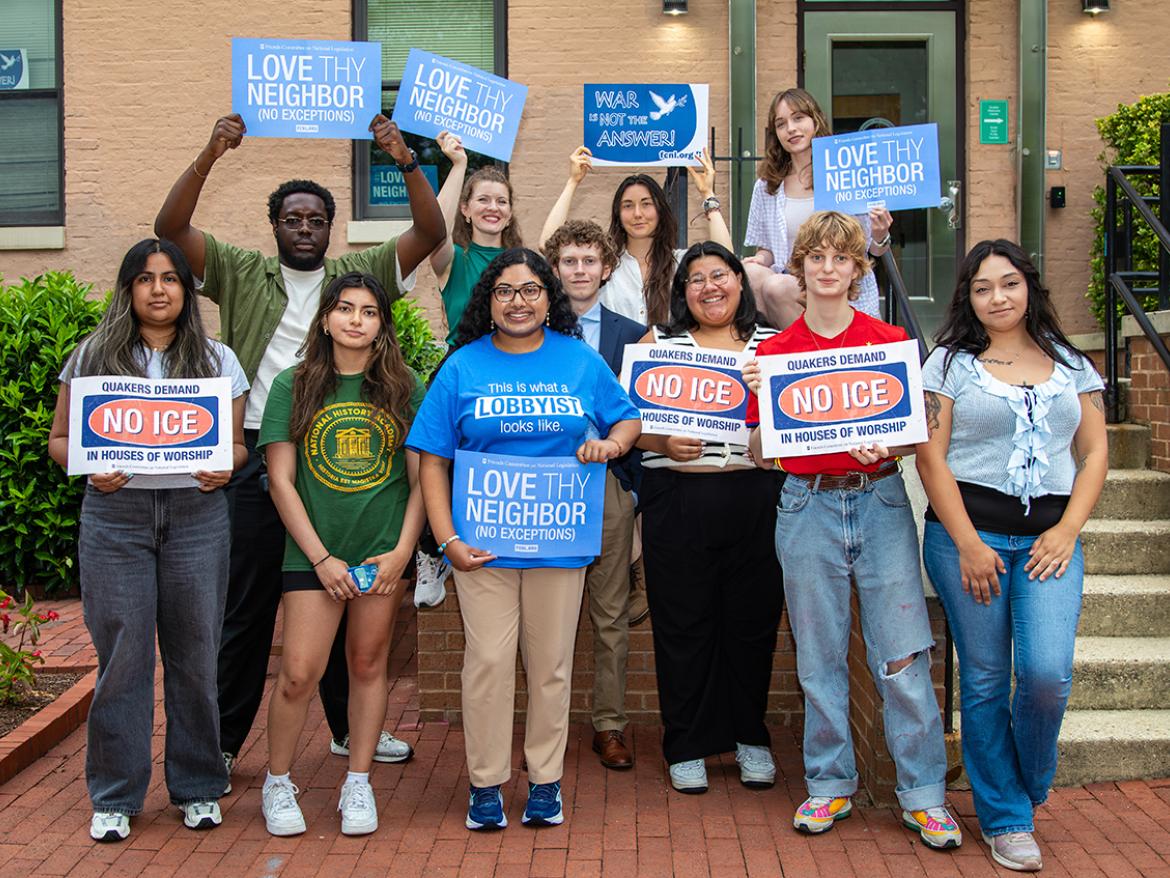
In response, FCNL created the Advocacy Corps program in 2015. During the program young adults (ages 19–30) work to mobilize their communities and influence members of Congress for 10 months. In the last decade, nearly 200 young organizers have participated. They host events, lead lobby visits, train others to lobby, and publish letters to the editor, among other engagement activities. In the process, they bring dozens of people from their communities into FCNL’s advocacy work.
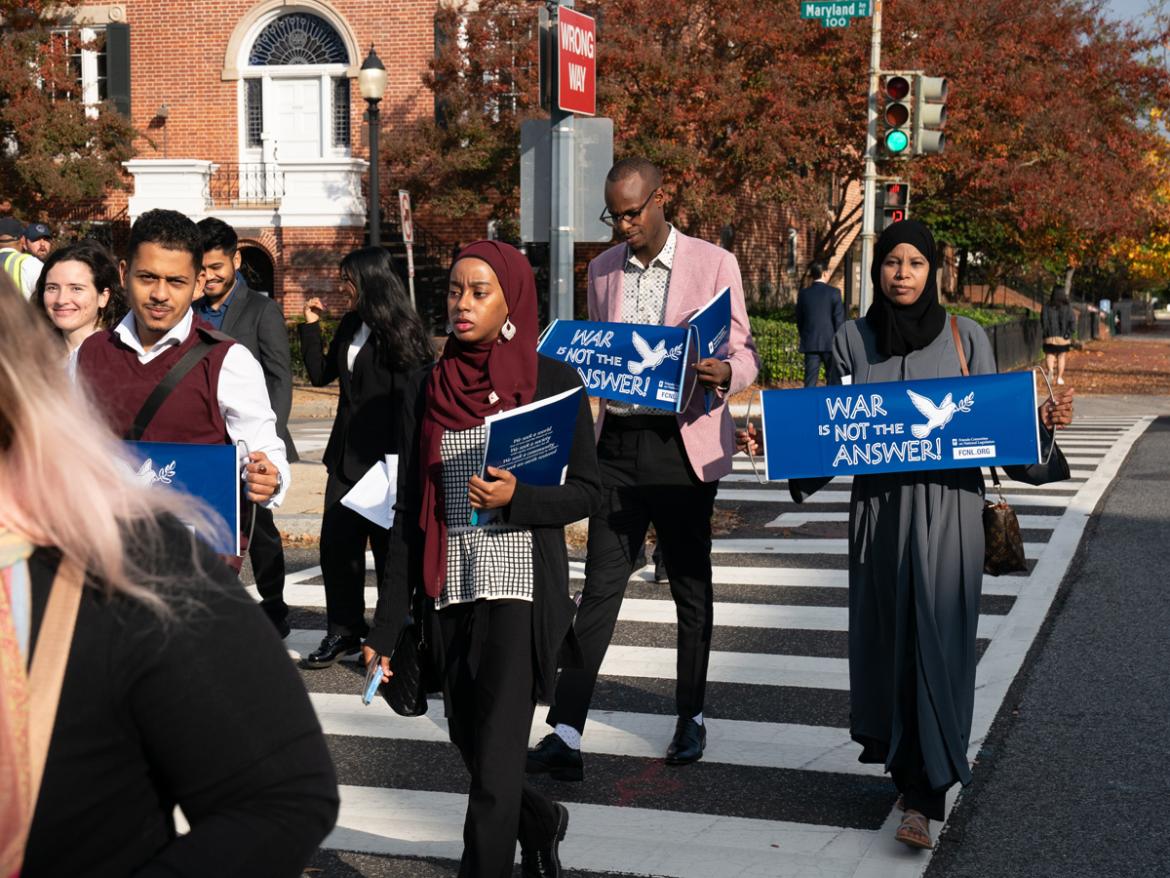
“I’m here with the Quakers.”
The young organizers’ journeys do not end after 10 months. Many continue to be active with FCNL. LaVida Davis, director of strategic advocacy, calls it “a natural onramp to continuing advocacy.”
Sergio Mata-Cisneros (AC 2016-17) went on to work as an FCNL summer intern and as a program assistant. Currently, he uses skills honed as a young organizer in his role mobilizing people on hunger issues for a New Mexico food bank.
“The program really got me the opportunity to find my voice–how to speak out, and how to organize and learn these tools of advocacy,” he said. “In these times, it’s about how you come together, build community, and support each other.”
Though not a program requirement, many organizers seeking a spiritual home find one among Friends through their work with FCNL. Even for those who do not, lobbying grounded in Quaker testimonies has other benefits.
Rachel Overstreet (AC 2022-23) is now FCNL’s legislative representative for Native American advocacy. She said that FCNL taught her to use a faith perspective to bridge partisan divides. “As soon as you say, ‘I’m here with the Quakers,’ all the preconceived notions go out the window—and they always ask about oats,” she said.
Trusted Messengers
The Advocacy Corps has proven that young advocates can be leaders. “They’re trusted messengers who can inspire civic engagement and push back against the cynicism that says, ‘there’s nothing I can do’,” said Justin Hurdle, advocacy campaigns and stakeholder engagement manager.
Importantly, young people do not need to be a seasoned advocate to join the Advocacy Corps. Traditionally, FCNL trained organizers to focus on a single issue, selected based on legislative opportunity, national mobilization potential, and Friends’ priorities.
Past issues have included migration, climate change, and the establishment of a truth and healing commission on Native American boarding schools. Young organizers are recruited from key states and from affected communities.
“There’s no single Advocacy Corps story,” Breslin said. “Organizers bring a wide range of experiences and identities—and that makes the program stronger.”
A decade in, the Advocacy Corps has adapted to the shifting political landscape. While organizers still focus on one primary issue–this year, seeking welcome and safety for immigrant neighbors–the program now offers flexibility to engage on other FCNL priorities that may better resonate with Corps member’s lawmakers.
More Relevant Than Ever
“The Advocacy Corps is more relevant than ever,” said Jim Cason, former associate general secretary for policy and advocacy. “Change won’t start in Washington—it will come from communities across the country, especially those that haven’t had the privilege or political space to engage. That’s where we must build tools, trust, and ties to change the conversation.”
Since change does not happen overnight, milestones—like a lawmaker recognizing FCNL’s advocacy when a new organizer embarks on their first lobby visit—offer motivation to persevere.
“I think the success of the Advocacy Corps… is not necessarily that we got a bill passed or that we got legislation signed into law. That happens sometimes, but more of the success is that we made noise. We were heard,” said Larissa Gil Sanhueza, FCNL’s director of young adult advocacy.
This summer marks five years since Rep. Lewis died. With a lifetime dedicated to public service, civil rights, and democratic participation, he, too, played the long game. FCNL’s Advocacy Corps organizers honor his legacy of making noise and getting in good trouble.