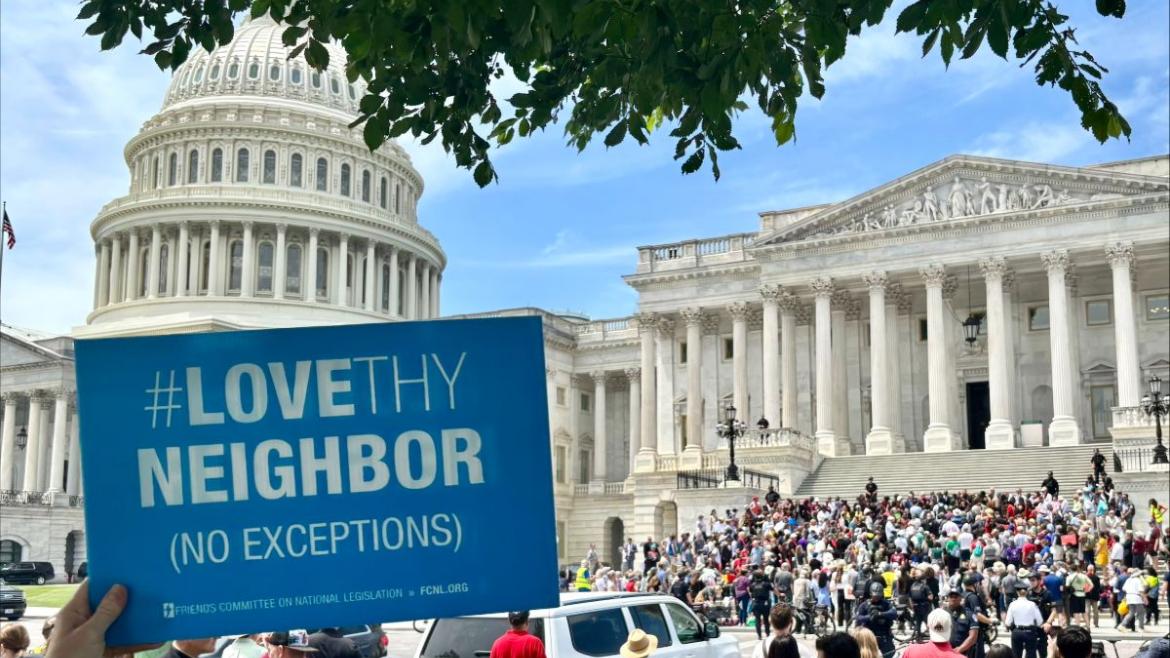
If I want to understand what is happening in my neighborhood right now during the ICE invasion of Minnesota, I go to my local gas station.
The owner has become an unwilling chronicler of this surge in enforcement. For weeks, he has watched swarms of unmarked agents descend on his lot. The pattern, he told me, is unmistakable: the drivers they target aren’t white. He has seen cars surrounded, people taken, and the toll this has taken on his business and a neighborhood already under strain. He tried to reason with the agents directly, pleading with them to understand what they were doing to his customers and his livelihood. His pleas were ignored. What remains are cars abandoned in his lot—quiet markers of neighbors who never made it home.
I saw the chaos myself when a fleet of unmarked vehicles came barreling out of the station—no sirens, just visible weapons and panic. “Let him turn around first!” several of us shouted, hands raised, trying to prevent an accident. A neighbor pulling in for gas was nearly crushed when the agents turned the wrong way in their haste to leave. He wasn’t running; he was simply in their path.
Once they forced their way through, the agents sped off with their passenger-side doors swung wide, a tactic meant to intimidate anyone watching. I went inside to buy some Gatorade and Cheetos—a surreal attempt at normalcy—and checked on the owner again. Outside, the abandoned cars still sat in his lot, holding the absence of the people who had been taken.
When Helping Becomes a Deadly Act
As a Quaker, my faith is rooted in the conviction that there is “that of God” in everyone. When I see agents surrounding cars based solely on skin color, I see a system choosing to ignore the Divine Light standing right in front of them. This disregard for the sacred has created a reality where the most basic human impulse—to help—has become a dangerous risk.
Most of Minnesota is living under a lawless “Metro Surge” and nowhere is safe.
The world saw this in the killing of Alex Pretti, an ICU nurse who lived by the values of care and service. When Alex saw agents push a woman to the ground, he did what any nurse would do: he stepped in to help her up. For that act of compassion, he was shot. We saw it in the heartbreaking death of Renee Good, shot after dropping her child off at school. Both incidents happened within a mile of my house. These were my neighbors living out their constitutional rights to observe and protest the terror in our communities.
Most of Minnesota is living under a lawless “Metro Surge” and nowhere is safe. I witnessed this terror firsthand recently when I received a frantic alert that an abduction was in process. I ran to a nearby street, but I arrived only in time to see the dust settling as Immigration and Customs Enforcement (ICE) drove away with a mother, her two children and their dog on their way to school. I stood with neighbors as we desperately tried to figure out how to return their abandoned car to a house that was suddenly, tragically missing its heart.
When the state treats “seeing the Light” in another person as a threat, the community must become its own sanctuary.
When the state treats “seeing the Light” in another person as a threat, the community must become its own sanctuary. Neighbors are now organizing “grocery runs” and “buddy rides” for those too terrified to leave their doorsteps. We are protecting the Light in one another, hoping that this will be enough to get us through to the other side. Policymakers must exercise their authority in the same spirit to rein in this terror now. Winding down this surge is not enough. This nation needs accountability and oversight, and the clock is ticking.
Answering a Call in my Home
On the ground, we know this is not only a crisis of safety but a crisis of the spirit—one that pulled me back into the world of faith-based organizing. I joined hundreds of others to answer a call from MARCH (Multifaith Antiracism, Change and Healing), a Minneapolis-based coalition of multiracial clergy. In the same spirit as the 1965 call to Selma, we were summoned to witness the targeted violence haunting our immigrant neighborhoods. As a resident of Minneapolis, I stood alongside faith leaders who had traveled from across the country—souls who, like those who went to Alabama sixty years ago, came to help bear the weight of a community under siege.
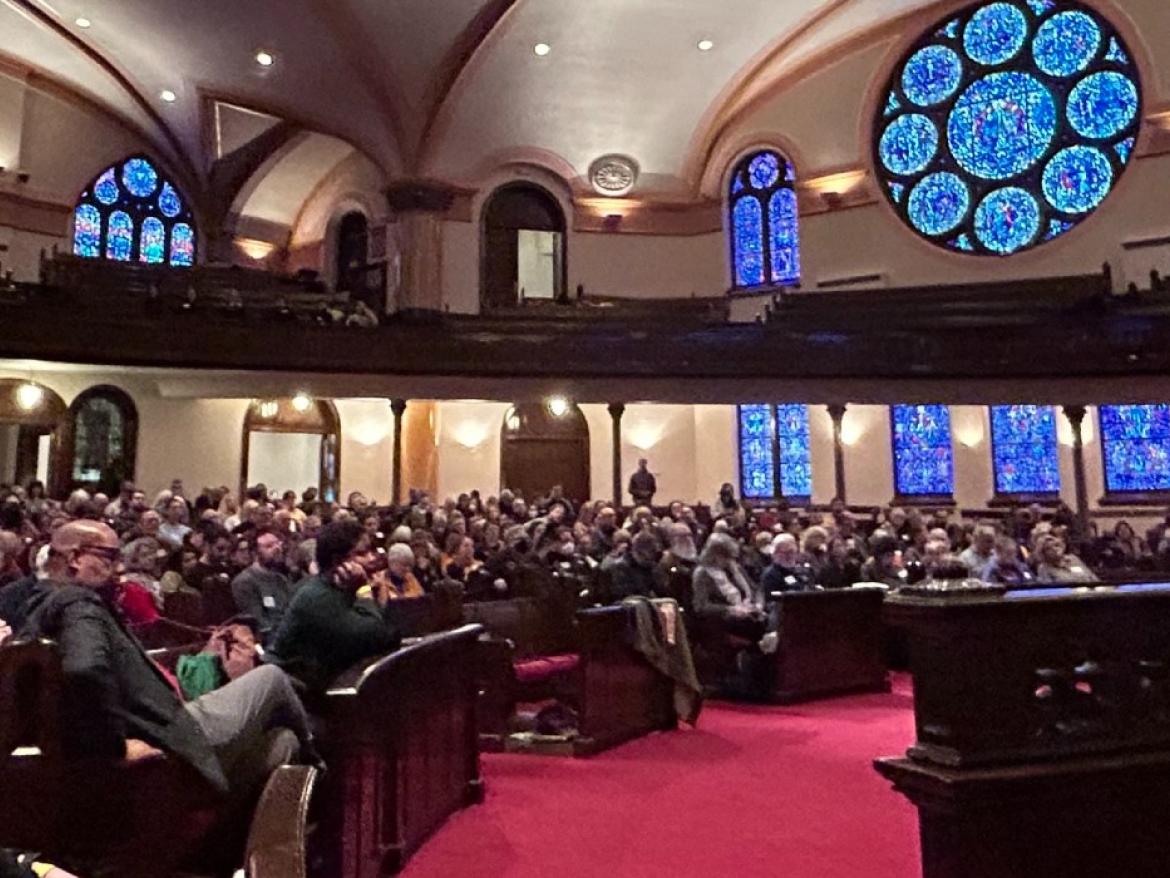
Quakers in Minneapolis and across the country have been showing up to that call. I felt that lineage deeply as I returned to this work of witness alongside my former FCNL colleagues, Christine Ashley and Welling Hall. Standing with them was a reminder that Quaker faith has always demanded more than quiet belief—it has required visible, embodied resistance to injustice. On Thursday, we gathered for training and worship, grounding ourselves in the shared values that would become our strength.
The next day, we carried that grounding into the streets with immigrant rights groups, unions, and thousands of neighbors who took the day off to stand up for justice. We walked downtown in negative-degree weather to tell ICE to get out. People arrived with trays of hot tea, egg rolls, and the best sambusas I have ever tasted, passing them out like sacraments to keep us warm. At one point, my glasses fogged completely, leaving me marching blindly into the freeze. Still, I felt safe—held by the knowledge that I was surrounded by people who had my back.
Most Quakers, myself included, are in positions of relative privilege in this moment. That reality comes with responsibility.
Most Quakers, myself included, are in positions of relative privilege in this moment. That reality comes with responsibility. It calls us to show up relentlessly: at pray-ins and vigils, in letters and calls to Congress, in lobby visits, and in public witness that refuses to look away. This is not separate from the community solidarity I have learned from Minneapolis—it is an extension of it. Faith, like community, is not a passive noun but an active discipline, practiced in how we place our bodies, our voices, and our resources in service of our neighbors.
In my time living here, Minneapolis has been my greatest teacher. This city has grown my spirit and deepened my understanding of what it means to love your neighbor—not as an idea, but as a daily, demanding practice. It has shown me that our true security lies not in force or fear, but in our commitment to one another.
Speaking Truth to Power
We cannot stay in the safety of the crowd forever. The “Metro Surge” is a moral failure funded by our tax dollars, and our Quaker witness demands that we speak truth to power in the face of raging executive overreach. Last year, Congress gave an already abusive and lethal immigration enforcement system $170 billion. Legislators are facing a February 13th deadline to determine the fiscal year 2026 funding decisions for the Department of Homeland Security, which is the home of ICE and Border Patrol. Additional funding cannot be on the table, but real guardrails to rein in ICE and Border Patrol and to ensure real accountability for immigration officials must be.
To protect our neighbors, by February 13th Congress must:
- Provide not another penny for warrantless, rogue operations by masked and unidentified agents that carry out state violence.
- Guarantee an end to the armed occupation of our cities and Border Patrol deployments.
- Stipulate clear guidelines to ensure communities are safe from unchecked enforcement, including our schools, hospitals, and places of worship. The Protecting Sensitive Locations Act (H.R. 1061/S. 455) is a good start.
True security is rooted in justice, not fear. We hold those harmed in the Light, and we demand a budget and guardrails that reflect our shared humanity.