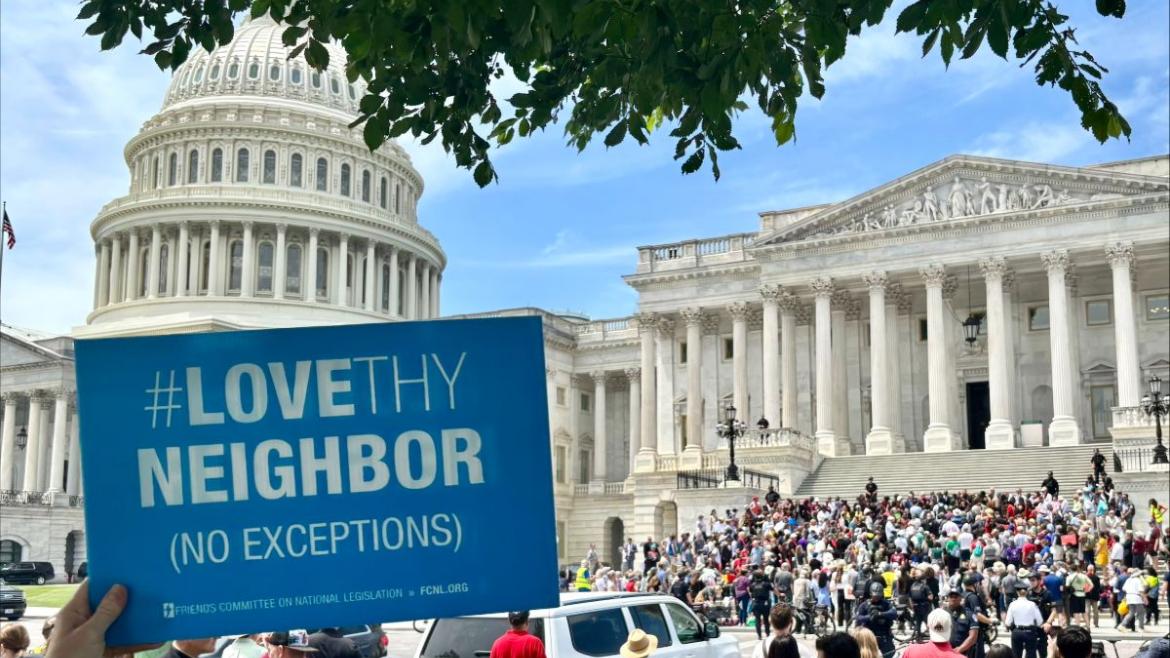
As the new Gaza ceasefire takes effect today, Israeli forces have begun pulling back, and thousands of Palestinians have begun trekking back to whatever remains of their homes.
After two horrific and painful years, the ceasefire agreement announced this week provides hope for a reprieve from the genocide in Gaza and the return of all hostages.
The human toll over these past two years is incalculable. This toll continues to mount, as the Israeli government’s relentless bombardment of Palestinians continued even after the agreement was announced. Even after the last bomb is dropped, the pain and trauma will endure for decades.
This moment could mark the beginning of the long path toward healing. But only if all parties take the steps needed to turn our hopes for peace into reality.
The deal follows a framework from Israel and the United States. The terms are vague, but here are some key things to know:
Hostage releases could happen by Monday. All Israeli hostages are set to be released, along with around 2,000 Palestinian prisoners, primarily women and children. We pray for the swift return of all these loved ones to their families.
What happens next isn’t clear. Fragile ceasefires have broken down before. We need enforceable international guarantees to ensure the bombardment ends and aid flows freely. Crucially, that means halting U.S. weapons to Israel to ensure they are not used to restart the violence.
Humanitarian aid is supposed to return to pre-war levels. This is welcome, but not nearly enough. Aid should never have been cut off or used as a bargaining chip in the first place.
Palestinian families need a massive surge of aid now. That means full international aid access, the restoration of UNRWA, and an end to the failed Gaza Humanitarian Foundation.
We are concerned that no Palestinians were represented in these negotiations. This deal was crafted without the people most impacted — raising questions about its long-term viability.
As we said in a statement, “Lasting peace will only come when it is built on equality between Israelis and Palestinians, self-determination, accountability, an end to the occupation, and the right of all people to live free from violence and with dignity for themselves and for future generations.”
Elsewhere
Steps Toward Ending Trump’s Murder on the High Seas
This past week, a Venezuela War Powers Resolution led by Sens. Adam Schiff (CA), Tim Kaine (VA), and Rand Paul (KY) narrowly failed in the Senate in a vote of 51 to 48. The resolution (S.J.Res.83) sought to stop President Trump from using the military in illegal attacks in the Caribbean.
As Lydia El-Sayegh, Scoville Fellow at FCNL Education Fund, explains, this close vote is encouraging although it did not pass. We will continue to build on the strong opposition to this violent and unlawful course.
As Sen. Paul said, “A republic that allows its Executive to kill without law is a republic in deep peril.”
A Big Win in the Senate to End Endless Wars
Last night, the Senate passed a bipartisan amendment which would repeal the 2002 and 1991 Authorizations for the Use of Military Force (AUMF) against Iraq! This comes after the House also passed an amendment to repeal these AUMFs in its annual defense authorization bill.
These authorizations have been abused by both Republican and Democratic presidents, and it is long past time for them to be repealed.
These votes are years of persistent advocacy in the making! We’re hopeful that this will remain in the final bill Congress will pass later this year.
Activists Speak Out as Shutdown Continues
Faith activists are speaking out as the federal government shutdown continues.
Yesterday, FCNL’s Bridget Moix spoke at a vigil with several members of Congress, calling on lawmakers to reopen the government, protect those facing huge increases in health care costs, and reclaim the power of the purse that President Trump is trying to grasp. That night, hundreds of advocates gathered for an FCNL network call on Faithful Advocacy During a Crisis where we were inspired and energized towards action.