I first learned about Friends Committee on National Legislation when they led a one-day advocacy workshop for Action for Congo and the DRC Diaspora Desk this past August. I had joined the DRC Diaspora Desk earlier in the year, after the war in the Democratic Republic of the Congo escalated and large parts of the country fell under the control of the M23 rebellion and the Rwanda Defense Forces. Like many fellow Congolese in the diaspora, I was searching for concrete ways to help bring peace back to my country of origin. The session taught us about the fundamentals of successful advocacy and lobbying of the U.S. government.
During the workshop, one of the facilitators mentioned that it was the final day to apply for FCNL’s Diaspora Organizer Program. Since I am relatively new to advocacy, this seemed like an opportunity to learn and bring lessons bring back my learnings to my colleagues at the DRC Diaspora Desk to increase our effectiveness.
The first thing that struck me about the program was its diversity which highlighted the similarities in global struggles for peace and justice.
Participants from Burma/Myanmar spoke about the military junta’s violence and the ongoing fight to protect the Rohingya. Advocates from Haiti recounted the painful aftermath of Haitians being accused of eating dogs during the last presidential campaign as well as their struggle for Temporary Protected Status (TPS) which aligned with the cause of another advocate from Venezuela. Another advocate from Ethiopia was lobbying to help provide humanitarian assistance to people in Tigray.
Peace flows from advocacy and organizing by local and diaspora communities working together to bring change.
Listening to their stories and causes was both humbling and illuminating. They revealed a simple truth: peace flows from advocacy and organizing by local and diaspora communities working together to bring change.
One of the many memorable sessions was led by an Iranian-American advocate who spoke about her community’s efforts to influence U.S. policy. They worked to ensure that war didn’t erupt in June when it appeared that Iran, Israel, and likely the U.S. were on the brink of war.
During the discussion, I asked her what it would take for Iranian-Americans to have the same kind of political influence that Irish Americans and other diaspora groups have had historically in U.S. politics. Her response was thoughtful: time and a willingness to engage politically, despite the aversion to politics many Iranians carry from having fled repression.
That conversation reminded me that while diasporas can learn from one another, there is no one-size-fits-all model for political influence. Every community has its own history, relationship to its homeland, and path to organizing. But what is universal are the ingredients of success: strategy, collaboration, community, and consistency.
On the last day of the program, it was time to put these lessons into practice. Each participant had at least one meeting planned with a member of Congress. I met with one of Senator Dave McCormick aides to advocate for the DRC and the urgent need for oversight on the peace deal that the DRC and Rwanda signed on June 27.
As peace and prosperity in the DRC are deeply intertwined with America’s prosperity and security, my ask for oversight was rooted in these three elements:
- Justice must be a pillar of peace. Without accountability for state and non-state actors who committed grave human rights abuses, any peace agreement will not be sustainable.
- Foreign troops must be withdrawn fully and transparently. The thousands of Rwandan troops operating in the DRC must be withdrawn in accordance with UN Security Council Resolution 2773 passed in February 2025.
- Civil society and survivors must be consulted.
Though I didn’t secure every meeting I had hoped for, I followed up with virtual meetings the next week. I had a stronger sense of what effective advocacy looks like: patience, consistency, and clarity of purpose.
The policy training was critical, but I think the community will have a longer lasting impact. Over shared meals and early morning coffees, we learned from one another—not as experts, but as peers in a shared pursuit of justice.
The policy training was critical, but I think the community will have a longer lasting impact.
Our conversations didn’t end with our own causes. We began forming alliances across movements. Action for Congo—the advocacy group I am part of—will be amplifying a petition initiated by the Burmese community to call on Congress to strengthen human rights protections. This kind of cross-diaspora solidarity is a major takeaway from my time in the program.
With collaboration, community, and continuous learning, we can build the kind of long-term influence that makes peace and justice possible—not just for our countries of origin, but for the world we share.
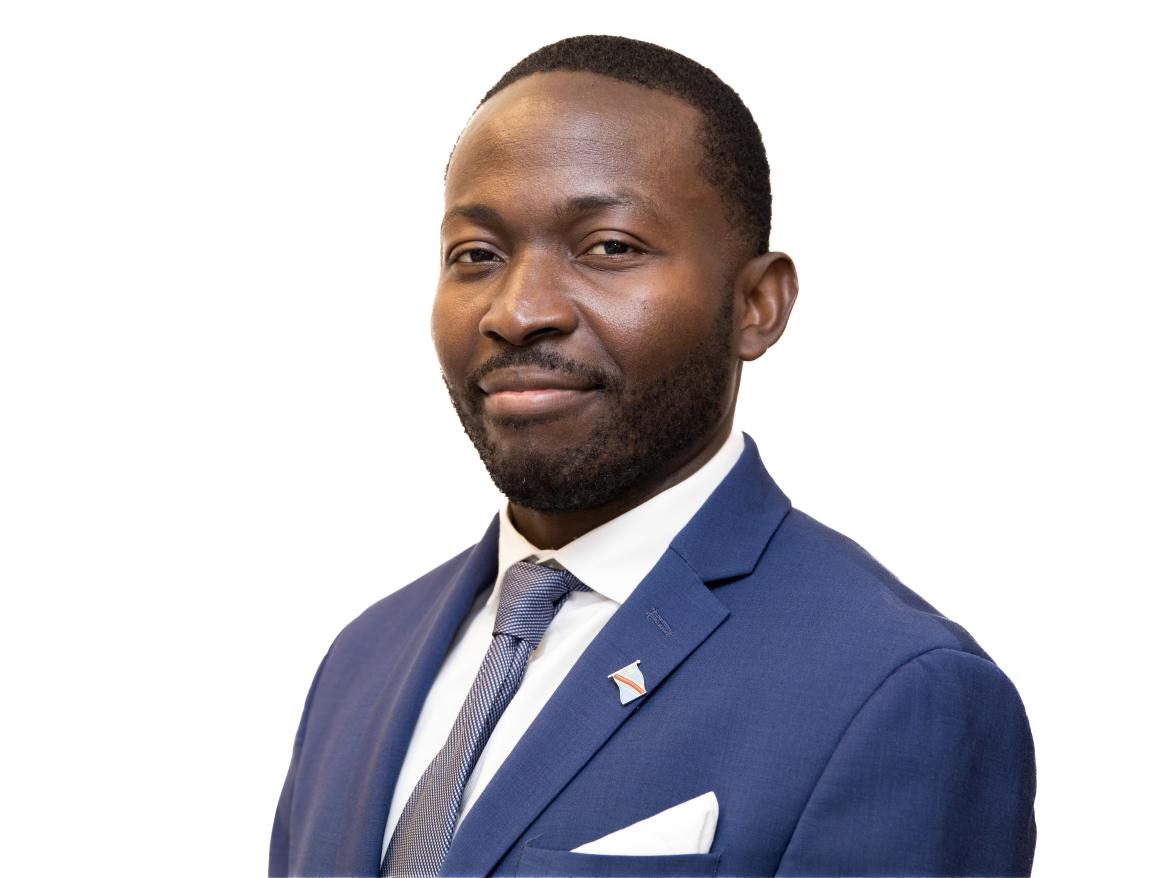
Jim Ngokwey
Diaspora Organizer