On a beautiful August morning in Richmond, VA, more than twenty Christian, Muslim, and Jewish faith leaders gathered for a day of advocacy. As prayers, readings, and stories were offered from across traditions, a shared purpose emerged: to bring our faith into action for peace and an end to suffering in Gaza.
One Episcopal priest put it plainly: “I have a voice that comes with the collar — and a power to speak up for people I’ve never met.” His words echoed throughout the day as clergy and lay leaders carried stories of suffering, resilience, and hope into congressional offices.
Faith leaders bring a unique and essential voice to advocacy. They are trusted leaders in their communities and powerful spokespersons for the moral urgency of peace. On this day, participants drew on personal experiences of travel to the Middle East, the values of their faith traditions, and personal stories of those affected by the humanitarian crisis in Gaza. We were blessed to welcome clergy and lay leaders from a wide spectrum of Christian, Jewish, and Muslim communities, representing six of Virginia’s eleven congressional districts.
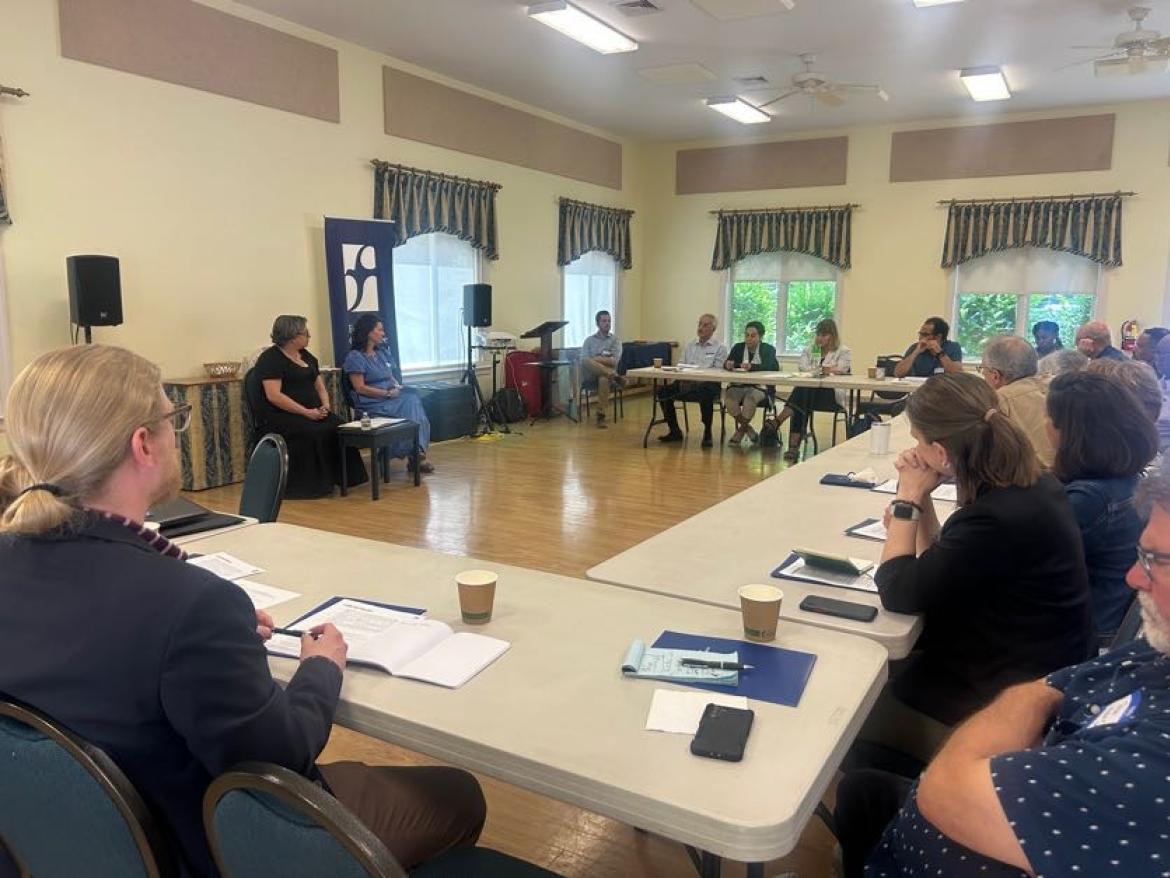
The morning began with spiritual grounding, followed by a briefing on current legislative openings for peace. Leaders prepared for lobby visits by learning about the positions of their members of Congress, practicing their talking points, and sharing the personal stories they would carry into the meetings. Midday, we paused to share a delicious Middle Eastern meal, complete with foods symbolizing peace — pomegranates, olives, and honey. This was a tasty reminder that fellowship can strengthen our advocacy.
In the afternoon, participants met with Rep. Jennifer McClellan (VA-04), thanking her for speaking out against the Gaza Humanitarian Foundation (GHF) and urging her to co-sponsor the Block the Bombs Act (H.R. 3565). They also met with staff for Senators Tim Kaine and Mark Warner, encouraging them to continue raising concerns about the GHF, to press for unfettered humanitarian aid into Gaza, and to support Joint Resolutions of Disapproval on offensive weapons sales to Israel.
Faith leaders told stories of loss, resilience, and hope — and lawmakers listened.
The lobby meetings were sobering and inspiring in equal measure. Faith leaders told stories of loss, resilience, and hope — and lawmakers listened. Sometimes quietly, sometimes somberly, sometimes visibly moved. Even when commitments were tentative, it was clear these conversations mattered. Small group dialogue, grounded in personal stories and moral conviction, can shift perspectives in ways money cannot. By day’s end, participants were encouraged that speaking truth to power, rooted in compassion, is necessary and possible.
Looking ahead, we are eager to support this vibrant network of faith leaders as they continue to raise their voices and to offer similar gatherings in other communities across the country. As we do this work, we draw strength from sacred texts such as Matthew 25:35–40, where Jesus teaches that when we feed the hungry, give water to the thirsty, and care for “the least of these,” we serve Christ himself. We find hope in community with one another. None of us are alone — and, together, our voices are powerful.
