As Quakers, we are called to help build a foundation for world peace. Peace and security can be achieved only by peaceful means.
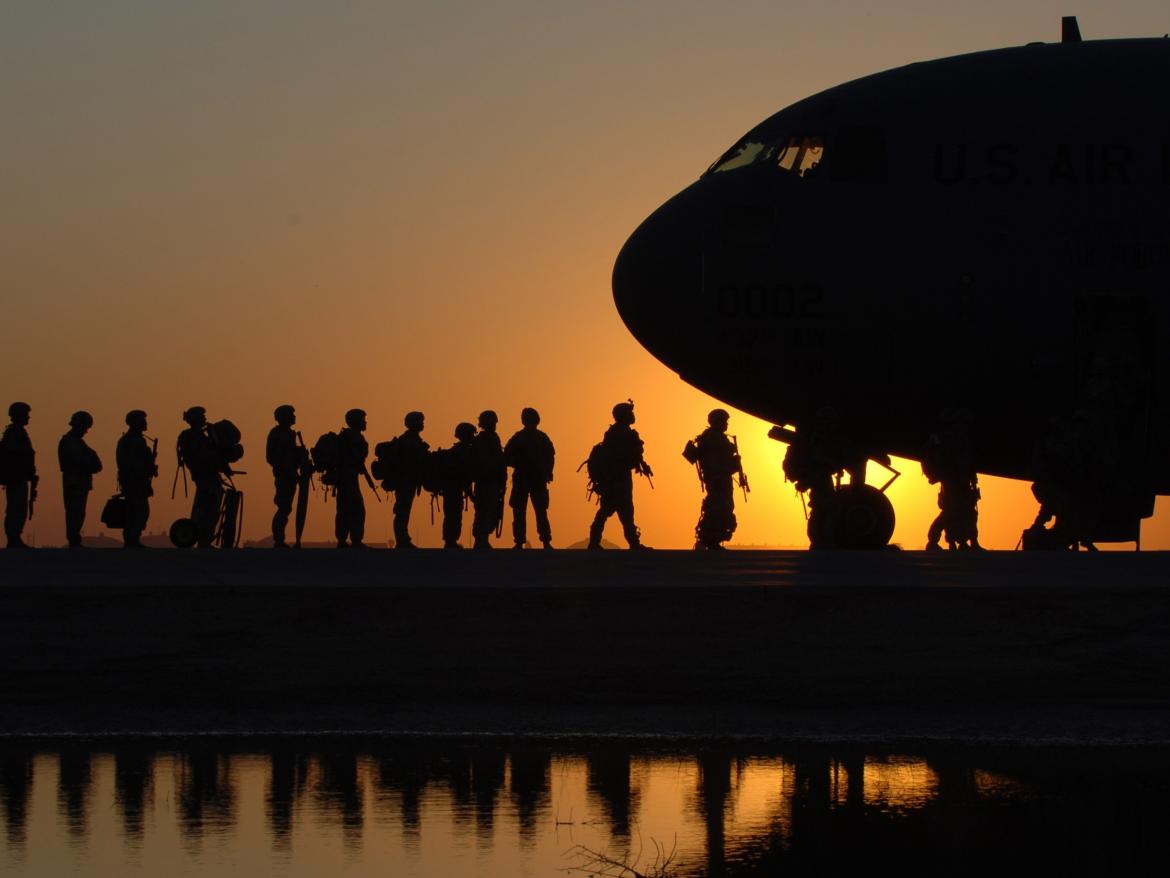
Since shortly after the 9/11 attacks, the United States has launched airstrikes, land invasions, and drone strikes around the world under the auspices of keeping us safe from terrorism. These wars have caused the deaths of approximately 940,000 people, including more than 363,000 civilians, and have cost $8 trillion.
Despite the manifest failures of the so-called “War on Terror,” and the American people’s opposition to war, the U.S. has continued this militaristic approach, reframing complex foreign and domestic policy issues as national security threats that require a lethal, military response.
From invading other countries, such as Venezuela and Iran, to killing suspected drug smugglers (labeled “narcoterrorists”) on boats in the Caribbean Sea and the Pacific Ocean, the U.S. government has expanded the “terrorist” label and manufactured threats to justify the unlawful and immoral use of military force.
Violent extremism won’t be stopped by “killing bad guys.” And bombing boats of suspected civilian drug smugglers does nothing to stem the flow of illegal narcotics or help Americans struggling with drug addiction. The U.S. must turn away from this disastrous and costly military-first approach, invest in alternatives to war, and make meaningful efforts to secure stability and peace.
The 2001 AUMF
For nearly two decades, successive administrations have conducted wars across the globe without congressional approval by relying on two laws that were passed in 2001 and 2002: the Authorization for Use of Military Force (AUMF) and the Iraq AUMF. Over many years, presidents of both parties have reinterpreted these AUMFs, expanding their scope to cover groups and countries never intended by Congress.
In 2025, after a sustained multi-organizational campaign led by FCNL, Congress repealed the 2002 Iraq AUMF, formally ending the Iraq War and ensuring that this authorization can never again be abused to justify new operations without a congressional vote.
When Congress votes on wars — when their constituents can hold them accountable for war-making — the United States is less likely to pursue military action.
The 2001 AUMF is left. Known as the “blank check” for endless war, it was passed by Congress three days after the attacks of September 11. Since this time, this single law has been used to justify military interventions around the world against groups, like ISIS, that did not exist in 2001, as well as indefinite detention at Guantanamo Bay, an illegal CIA torture program, and lethal drone attacks both in and outside of war zones. The 2001 AUMF, at only 30-words long, has been called “the most dangerous sentence in U.S. history.”
When Congress votes on wars — when their constituents can hold them accountable for war-making — the United States is less likely to pursue military action. Congress should end the 2001 AUMF and take back its authority to determine where and when the United States goes to war.
Join our email list!
Stay informed and stay active