I am a Rohingya survivor of genocide.
I was born into a community that the Myanmar military tried to erase through mass killings, sexual violence, village burnings and forced displacement. For decades, Rohingya people have been stripped of citizenship, denied basic rights and targeted simply for who we are. In 2017, that persecution escalated into what the United Nations and human rights experts have rightly called genocide.
Like so many Rohingya, I did not leave my home because I wanted to. I left because survival demanded it.
Today, I write this from the United States—a country that gave me the chance not only to live in safety, but to dream again. The United States offered me refuge when my own country denied my existence. It gave me access to education and the possibility of a future shaped by dignity rather than fear. For that, I carry deep gratitude.
Resettlement changed my life. It allowed me to heal, to learn and eventually to give back—not only to the country that welcomed me, but to the community I come from. The United States did not just save my life; it gave me a platform to use my voice.
Policy decisions made in Washington are not abstract—they determine whether families are reunited, whether children grow up safe, and whether survivors of genocide are given a chance to rebuild their lives.
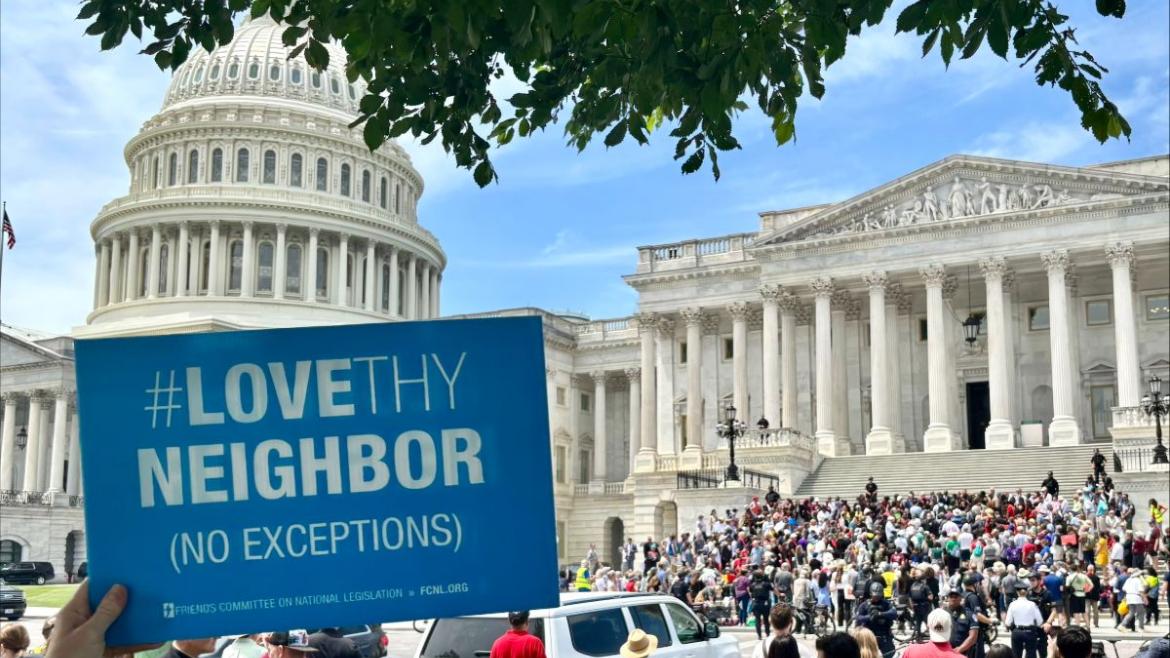
Today, I serve as a Diaspora Organizer with the Friends Committee on National Legislation, FCNL, advocating for refugee protection and human rights. I have met with policymakers and elected officials to share my story and to speak on behalf of Rohingya people who cannot be in those rooms themselves. Each meeting is a reminder that policy decisions made in Washington are not abstract—they determine whether families are reunited, whether children grow up safe, and whether survivors of genocide are given a chance to rebuild their lives.
Thousands of Rohingya refugees are currently in the pipeline to be resettled to the United States. Many are living in overcrowded camps, facing extreme restrictions on movement, limited access to education, inadequate healthcare and constant uncertainty in the Rohingya refugee camp in Bangladesh.
The United States has long been a global leader in refugee resettlement and that leadership matters deeply to Rohingya families who have already endured unimaginable loss. Coming to the United States means rebuilding their lives. It means children can go to school without fear. It means survivors can begin to heal from trauma rather than relive it every day.
Welcoming Rohingya refugees is not only a humanitarian act, it reflects America’s values and strengthens the nation itself. Refugees contribute economically, culturally and civically. I am living proof of what becomes possible when protection is paired with opportunity.
Our people remain scattered, stateless, and vulnerable. Their suffering is ongoing, and it demands sustained international attention.
My advocacy does not stop at U.S. borders. I carry deep concern for Rohingya communities suffering across the world, in refugee camps in Bangladesh, in precarious conditions in Malaysia and India and under continued threat inside Myanmar. Our people remain scattered, stateless, and vulnerable. Their suffering is ongoing, and it demands sustained international attention.
Right now, immigration enforcement in the United States is threatening my community after welcoming us. There are new policies which would open refugees up to arbitrary and unjust arrest. A blind Rohingya man who survived immense suffering was arrested by Bordar Patrols and then abandoned to wander the streets until he died. Refugees are being brutalized in what should be a safe country.
My journey from surviving genocide to advocating in the halls of power was only possible because the United States chose to care. At a moment when refugees are too often politicized and dehumanized, I request this country to continue leading with compassion and courage.
I am grateful for the chance I am given. Now, I advocate so others may have the same.