Truth and Healing Commission Bill Reintroduced in the House
On February 3, Representatives Tom Cole (OK-4) and Sharice Davids (KS-3) reintroduced the Truth and Healing Commission on Indian Boarding School Policies Act (H.R. 7325, S.761) in the House. The Truth and Healing bill is FCNL’s Native American Advocacy lobbying priority. We’ve been advocating for the legislation alongside our partners at the National Native American Boarding School Healing Coalition (NABS).
NABS recently released updated lists and maps of the boarding schools in 38 states. To learn about the history of boarding schools in your state, visit their website here. To learn more about Quaker involvement in the Indian Boarding School system, visit Friends Peace Teams Towards Right Relationship project.
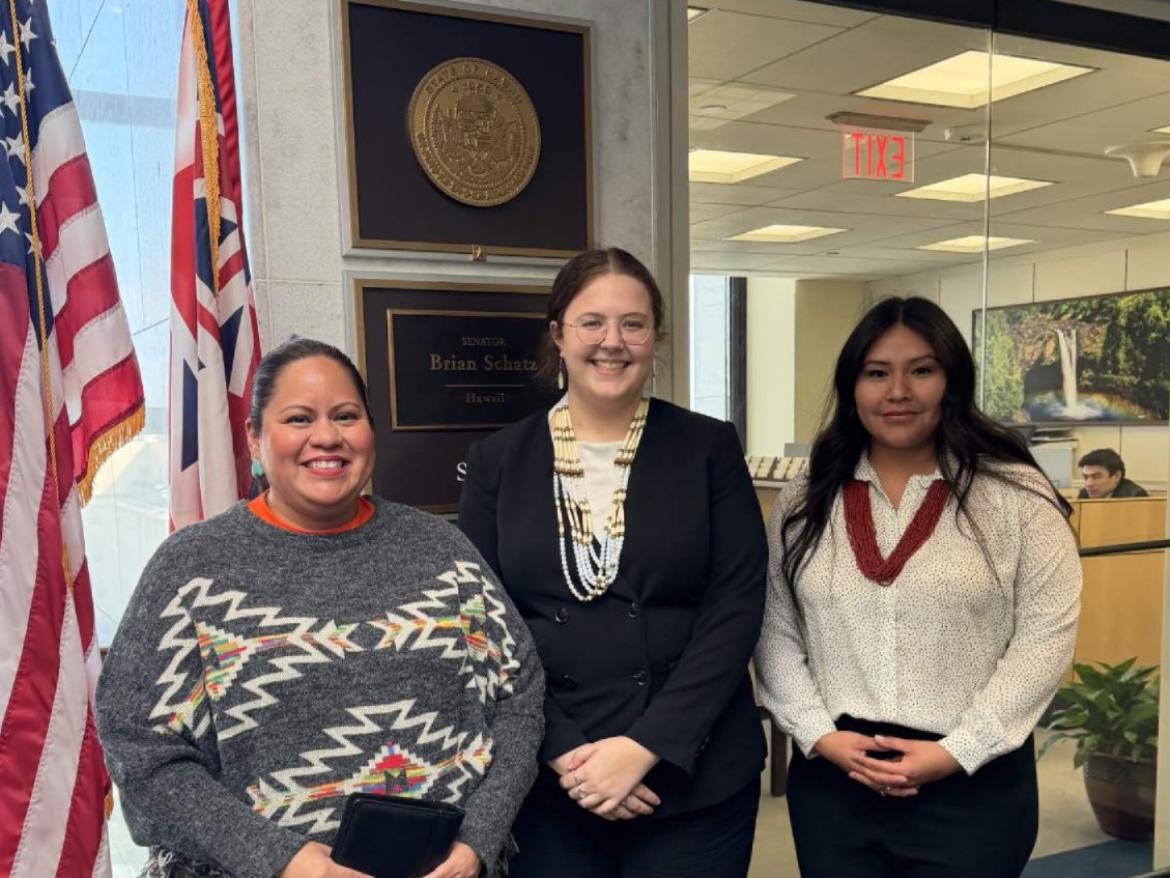
Ahead of the House bill’s reintroduction, FCNL hosted a lobby day for faith leaders in Washington. We welcomed clergy and people of faith for a time of community building, learning, and advocacy. To learn more about our fly-in, read our blog post here!
National Congress of American Indians Meets in Washington and Advocates for Tribal Priorities
During the week of February 9, the National Congress of American Indians (NCAI) held its annual Executive Council Winter Session in Washington. NCAI is the oldest and largest organization in the U.S dedicated to unifying and advocating for tribal communities. This yearly event brings tribal leaders, youth, and partners to D.C to lobby on issues impacting their communities. NCAI President Mark Macarro (Pechanga) also highlighted its policy priorities for the year through the event’s State of Indian Nations. Priorities included:
- Education: Major changes at the Department of Education, including the transfer of dozens of programs that support Native children. These have been undertaken without meaningful, statutorily required, tribal consultation.
- Public Safety and Justice: Addressing the Missing and Murdered Indigenous Women crisis continues to be a priority. Full funding for tribal police and courts, as well as the passage of critical legislation such as the BADGES for Native Communities Act (H.R. 1010, S.390), the PROTECT Act (H.R. 3773, S.1967), and the Parity for Tribal Law Enforcement Act (S.2452).
- Immigration Enforcement: President Macarro, alongside NCAI’s Youth Commission Co-Presidents Jonas Kanuhsa (Turtle Mountain Band of Chippewa Indians/ Oneida Nation) and Angelina Serna (Turtle Mountain Band of Chippewa Indians/ Oneida Nation), expressed strong opposition to the militarized immigration operations along the border and in Minneapolis, highlighting the impacts on tribal citizens who have been harassed, detained, and arrested.
Celebration of Alyce Spotted Bear and Walter Soboleff Commission on Native Children Implementation Act
This month, the Mandan, Hidatsa, Arikara Nation and Indian Country partners celebrated the finalization of the discussion draft of the Alyce Spotted Bear and Walter Soboleff Commission on Native Children Implementation Act. The Alyce Spotted Bear and Walter Soboleff Commission on Native Children Act was first introduced by Senator Lisa Murkowski (AK) and former Senator Heidi Heikamp (ND) in 2015. The legislation was signed into law in 2016, and the report was released in 2024.
The Commission studied the existing federal, state, local, and tribal programs serving Native American, Alaska Native, and Native Hawaiian children and made recommendations for improving their wellbeing. It included experts in education, juvenile justice, child welfare, and social services because the well-being of Native children requires cross-sector cooperation to address the whole child.
Statistics show that Native American children face significant risks and harms compared to their peers. More than 1 in 4 American Indian/Alaska Natives lived below the supplemental poverty line in 2022, and Native American students have the lowest high school graduation rate of any racial or ethnic group in the United States. To study these disparities, the commission conducted regional public hearings to hear directly from Native communities, and 26 site visits to urban, rural, and reservation-based programs serving Native children and youth.
The gathering hosted this month celebrated the finalization of the Implementation Act, the draft legislation that would implement the recommendations of the Alyce Spotted Bear and Walter Soboleff Commission.
What We’re Reading
- Indian Health Service Kicks Off Largest Hiring Wave in Agency’s History | Native News Online
- The US Government Says It is Falling Short on its Legal Duties to Tribal Nations | Grist
- ‘We’re Here Too Late’: Indian Country Slams Changes to Education Programs | Indianz
- Montana Tribe Fights Federal Government Effort to Change Narrative at Little Bighorn National Monument | MTN News