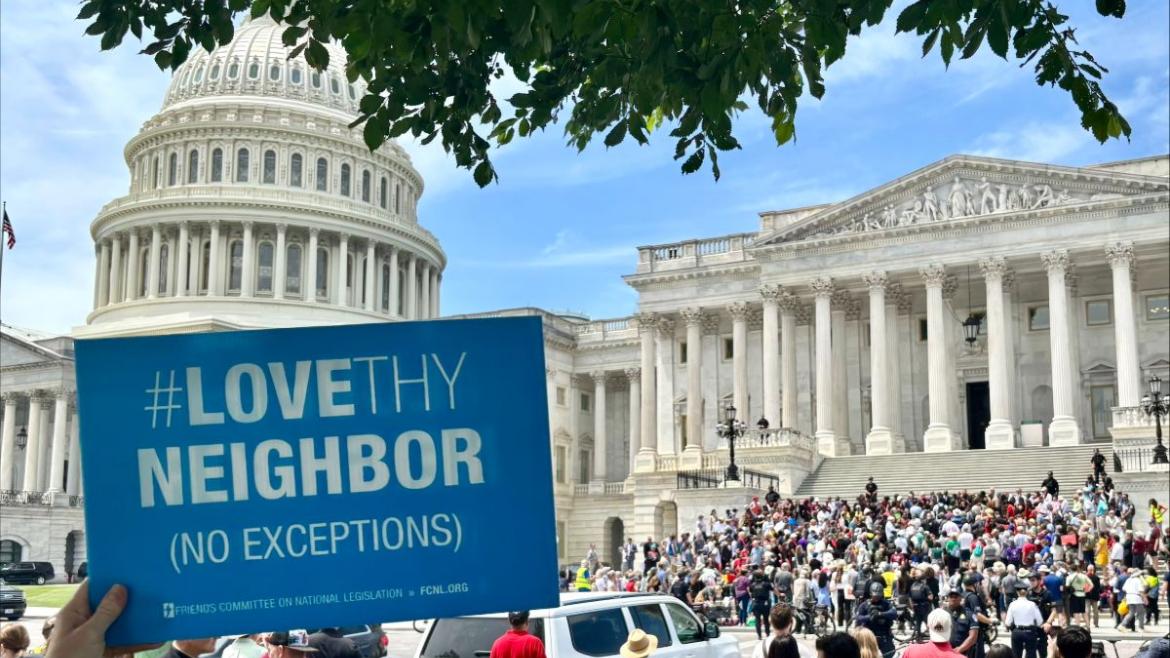
Congress may soon consider a supplemental spending bill of more than $200 billion to fund U.S. military operations against Iran. This legislation would deepen military engagement, increase the risk of a prolonged conflict, and could draw in U.S. ground forces. Lawmakers should reject any supplemental funding for this illegal war.
President Trump’s unauthorized war of choice is already costing over $1 billion per day, killing and displacing civilians, and threatening regional and global stability. Escalation puts U.S. personnel at risk and is disrupting the Strait of Hormuz, triggering major global energy shocks.
Meanwhile, Congress recently enacted historic cuts to Medicaid and food assistance and refused to extend health care subsidies because it could not find the funding. Prioritizing an illegal war over basic needs undermines both American values and fiscal responsibility. This moment demands restraint, accountability, and a renewed commitment to diplomacy—not another costly, open-ended conflict in the Middle East.
What has happened since the war started?
On February 28, the United States and Israel launched large-scale strikes on Iran, killing senior leadership figures and targeting military infrastructure, including missile systems, command centers, and suspected nuclear-related facilities. The administration framed these strikes as preemptive and defensive, but there was no imminent threat to the U.S., and the country is now caught in an ever-expanding military war in the Middle East. Subsequent strikes have hit sites across Iran, including both military and civilian infrastructure.
Iran has retaliated by attacking Israel and U.S. bases across the region and disrupting maritime traffic in the Strait of Hormuz, rising global energy prices and growing economic instability. The absence of meaningful diplomacy has allowed this escalation to spiral. Without active efforts to de-escalate and negotiate, the risk of a wider, more devastating regional war continues to grow.
The conflict has also spread beyond Iran’s borders. Israel carried out attacks in Lebanon, targeting Hezbollah positions as well as civilian infrastructure, while cross-border fighting has intensified. Gulf Cooperation Council countries have been drawn into the crisis, raising the risk of a broader regional war.
How did we get here?
U.S.–Iran tensions stem from decades of intervention, conflict, and failed diplomacy. In 1953, the United States backed a coup that overthrew democratically elected Prime Minister Mohammad Mossadegh and reinstated the Shah, whose authoritarian rule included widespread repression, censorship, and torture, leaving a deep legacy of mistrust toward the U.S.
The 1979 Iranian Revolution replaced the Shah with the Islamic Republic under a supreme leader. Since then, Iranians have faced ongoing repression and human rights abuses. Recent protests demanding political freedom, dignity, and economic relief have been met with violent crackdowns, with thousands arrested, injured, or killed.
At the same time, U.S. sanctions have imposed severe hardships on ordinary Iranians, fueling inflation, shortages, and barriers to life-saving medicine, despite humanitarian exemptions. After the U.S. withdrew from the Iran nuclear deal in 2018, sanctions intensified, and tensions escalated. The 12-day war in the summer of 2025 between the U.S., Israel, and Iran marked a dangerous shift toward direct military confrontation, setting the stage for the current crisis.
President Trump’s decision to launch an attack on Iran also comes amid a broader, dramatic surge in U.S. militarism under his administration. Since January 2025, the U.S. has launched military operations in Iran, Venezuela, Somalia, Nigeria, and Ecuador, while carrying out an ongoing campaign of illegal and immoral strikes on civilian boats in the Caribbean Sea and Pacific Ocean. At the same time, the president has repeatedly threatened a long list of other nations, including allies like Denmark, with military force.
Our Topline Messages
- There is no justification for this war: There has been no clear or compelling reason presented for why the United States should be at war with Iran right now. The President has not made the case to the American public or to Congress explaining why military action is necessary.
- Escalation is costing lives: Civilians and U.S. personnel are already dying, and further military expansion will only increase suffering across the region.
- Congress decides when the U.S. goes to war: The Constitution gives Congress—not the president—the power to decide when the nation goes to war. This war is illegal under Article I, Section 8 of the Constitution and the War Powers Act of 1973.
- War undermines U.S. security: Escalation risks regional instability, empowers hardliners, and threatens global markets. Americans are already paying too high a price.
- Misplaced priorities at home: There is no justification for Congress to prioritize funding an unnecessary war while failing to invest in urgent domestic needs—like preventing millions of people from losing access to health care and food assistance.
- Diplomacy is the only path forward: Military force cannot resolve the underlying political challenges between the United States and Iran. Negotiation is the only viable solution.
Counterpoints and Rebuttals
What about supporting the troops?
Supporting U.S. service members means keeping them out of unnecessary and dangerous wars—not sending them into preventable harm. Expanding this conflict increases the likelihood of attacks on U.S. personnel, wider regional escalation, and another prolonged military entanglement with no clear path to success. The most meaningful way to support troops is to avoid putting them in harm’s way and to pursue diplomacy that reduces threats rather than fuels them.
There’s a ceasefire. We’re just replenishing stockpiles, not supporting the war.
Replenishing stockpiles is not a neutral act. It directly enables the continuation and expansion of military operations. Weapons resupply allows fighting to continue, removes incentives for de-escalation, and signals ongoing U.S. backing for escalation. In practice, it deepens U.S. involvement and prolongs the conflict. If the goal is to reduce violence and avoid a wider war, U.S. policy should focus on limiting arms flows and using leverage to push for a diplomatic resolution, not sustaining the conditions for continued fighting.
With the tenuous, unclear nature of the two-week ceasefire, members should not vote to provide arms or funds that could reignite, or indicate any support for, this reckless war of choice. This is particularly important as within 24 hours of the ceasefire announcement, Israel launched its most devastating attacks on Lebanon, with strikes on over 100 locations within minutes resulting in hundreds of casualties.
Won’t opposing this Iran War Supplemental help the Iranian government?
War does not weaken repressive governments—it often strengthens them. Since the conflict began, hardline elements, including the IRGC, have consolidated power. Military escalation empowers these actors, justifies internal crackdowns, and sidelines Iranians advocating for reform and greater freedoms.
Preventing a wider war is about protecting civilians and avoiding regional catastrophe, not reinforcing the most extreme elements within the Iranian government. Diplomacy has consistently proven more effective at constraining harmful behavior while preserving space for long-term change.
Would funding this war act like an authorization?
The Constitution grants Congress, not the president, the power to declare war, and there has been no authorization for military action against Iran. However, history shows that sustained funding can be interpreted as implicit approval. For example, during the 1999 Kosovo intervention, Congress did not formally authorize the war but continued to fund it, actions later cited in court as de facto support.
Conclusion
This is a pivotal moment. Congress has the opportunity, and the responsibility, to prevent further escalation, uphold its constitutional role, and choose diplomacy over war. Funding this conflict will not make Americans safer. It will deepen suffering, destabilize the region, and entangle the United States in another costly and avoidable war. The only sustainable path forward is de-escalation, accountability, and a return to serious diplomacy.